4D Art
4D Art
By 4D art, I mean art that lives in time — art that moves, reacts, or demands participation. In 2001 I attended a workshop at the Perpich Center for Arts Education on integrating electronics into art. We built simple circuits with batteries, motors, lights, and switches, all scavenged from the aisles of Ax-Man Surplus. I was hooked. Back in my classroom, I reworked the lesson into an assignment about found objects — in this case, broken electronics. Students dismantled phones, VCRs, Walkmen, radios, RC cars, and animatronic toys, harvesting their parts to reconfigure the corpses as electronic kinetic sculptures.
For inspiration, I showed them Duchamp’s readymades (Kuenzeli, 1990) and Nam June Paik’s video sculptures (Hanhardt, 2000). Some machines yielded astonishing wealth: a single VCR contained more motors than most entire households had in the 1950s. The results my students produced were often chaotic, sometimes failures, but occasionally breathtaking. One student inverted the guts of a VCR to create a working remote-control car: “play” moved it forward, “rewind” drove it back. Years later, at the Perpich Arts High School, a student skinned a Billy Bass, reassembled its parts into a bird, and placed the limp fish-skin in its talons. The bird still sang Take Me to the River when its motion sensor was tripped — a surreal, mechanical resurrection.
Not every experiment worked. Many ended in smoke, sparks, or silence. But the real value was in the permission: to break things open, to see how they worked, to intervene in systems that manufacturers seal off. We live in a culture where repair is discouraged, where schools trade shop classes for tablets, where students rarely get to touch the guts of a machine.
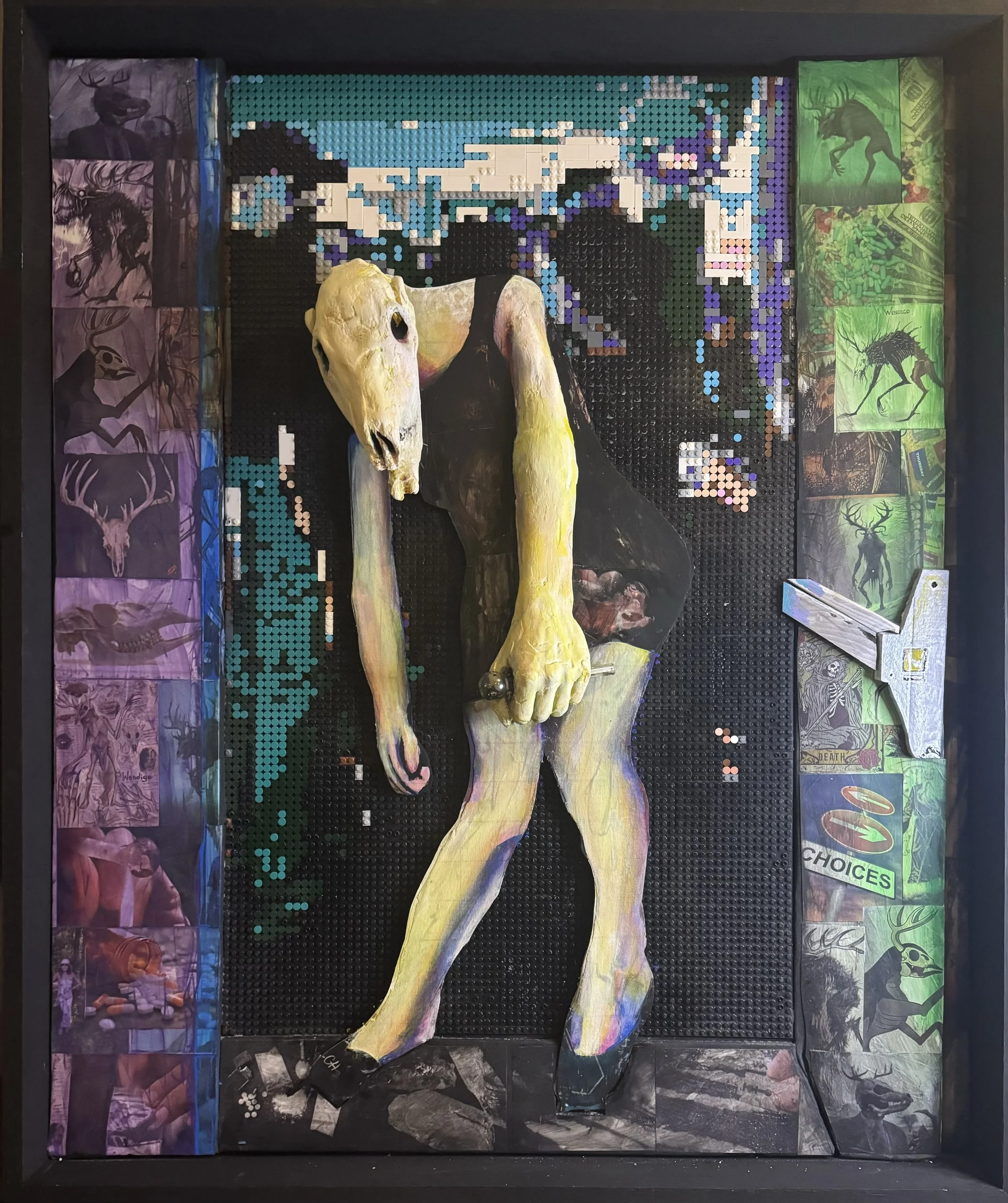
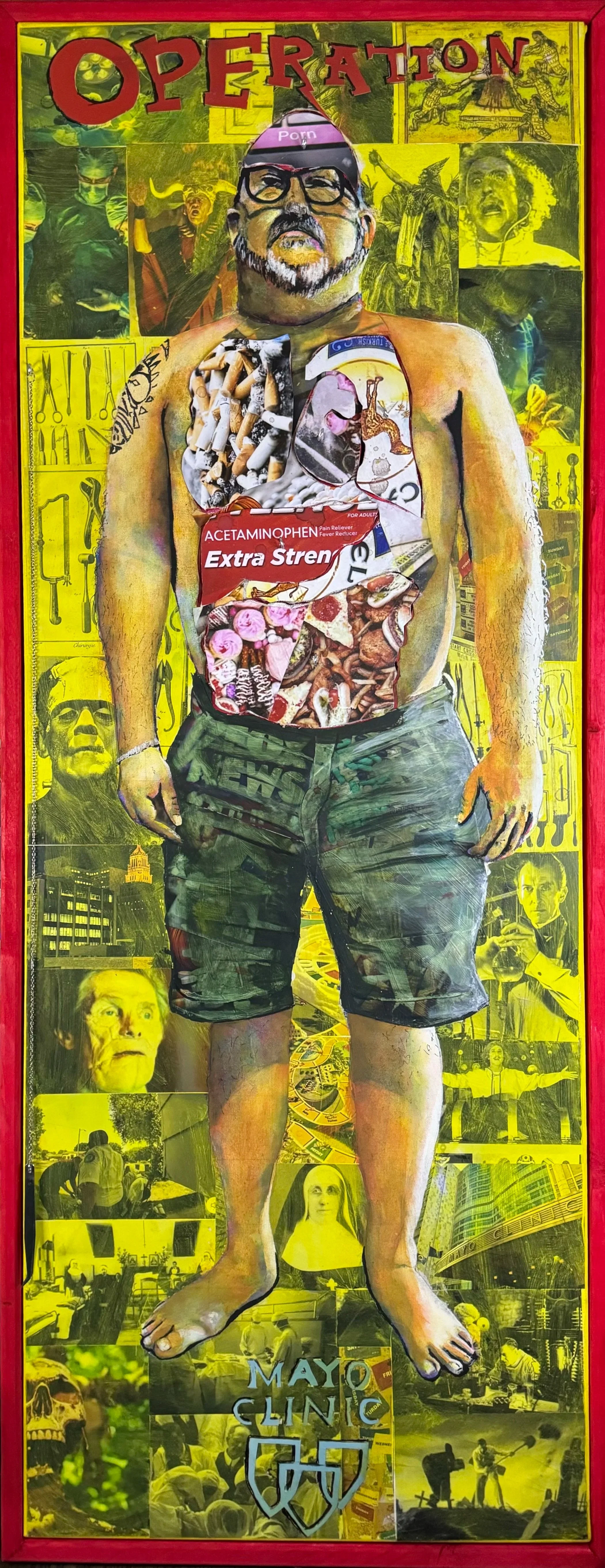
Because I asked my students to take these risks, I felt I owed them examples in my own work. Early on, I built Electric Jesus, a painting wired with a hidden MP3 player that croaked distorted hymns when a play button on the canvas was pressed. In my Perfect Day series, two works belong to this lineage: It’s All Just Fun and Games, a life-size Operation game that buzzes and lights up when the organs are removed, and The Wendigo, a haunting sculpture that exhales smoke when triggered by remote.
These works, mine and my students’, taught me that 4D art isn’t about electronics or spectacle — it’s about transformation. It’s about breaking something open and finding a strange, impossible new life inside.