LEGO Mosaics
LEGO Mosaics
After Samantha died, I opened our shared Amazon account. She had always been a compulsive shopper, but what I found floored me. Her “save for later” list no longer held dresses, perfume, or shoes — only items for her boys. That Christmas, I bought them gifts from her list and told them they were from her.
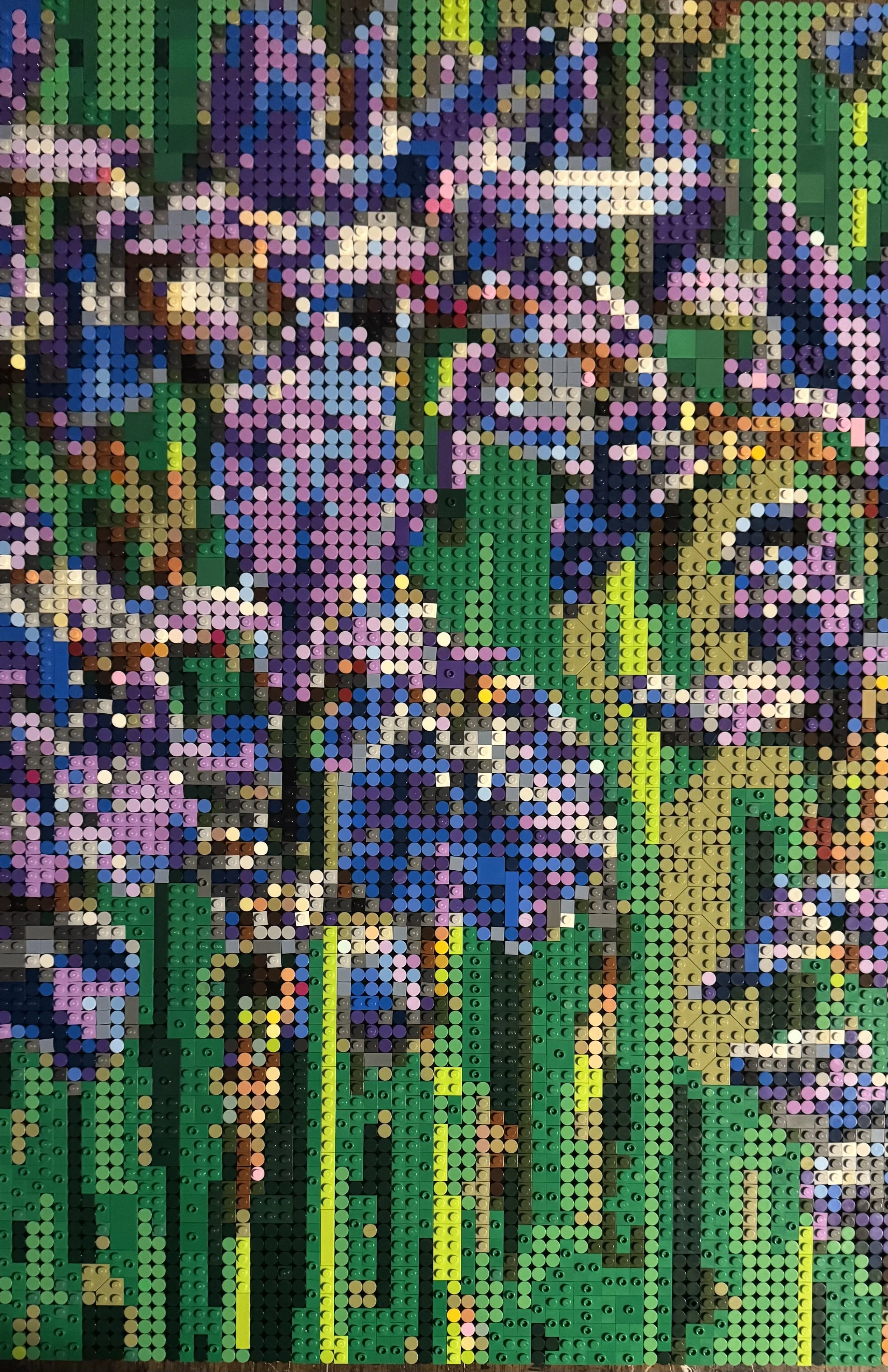
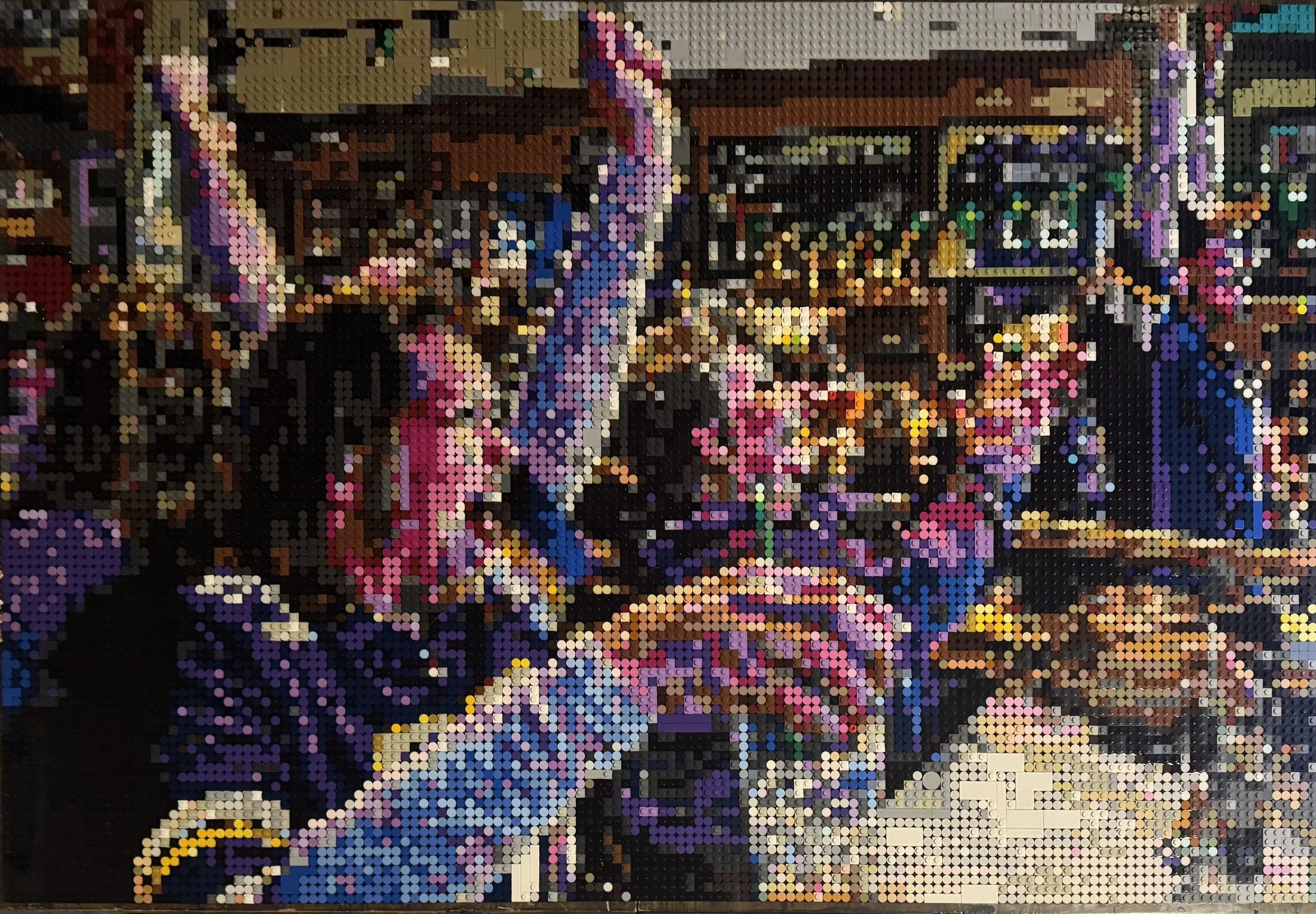
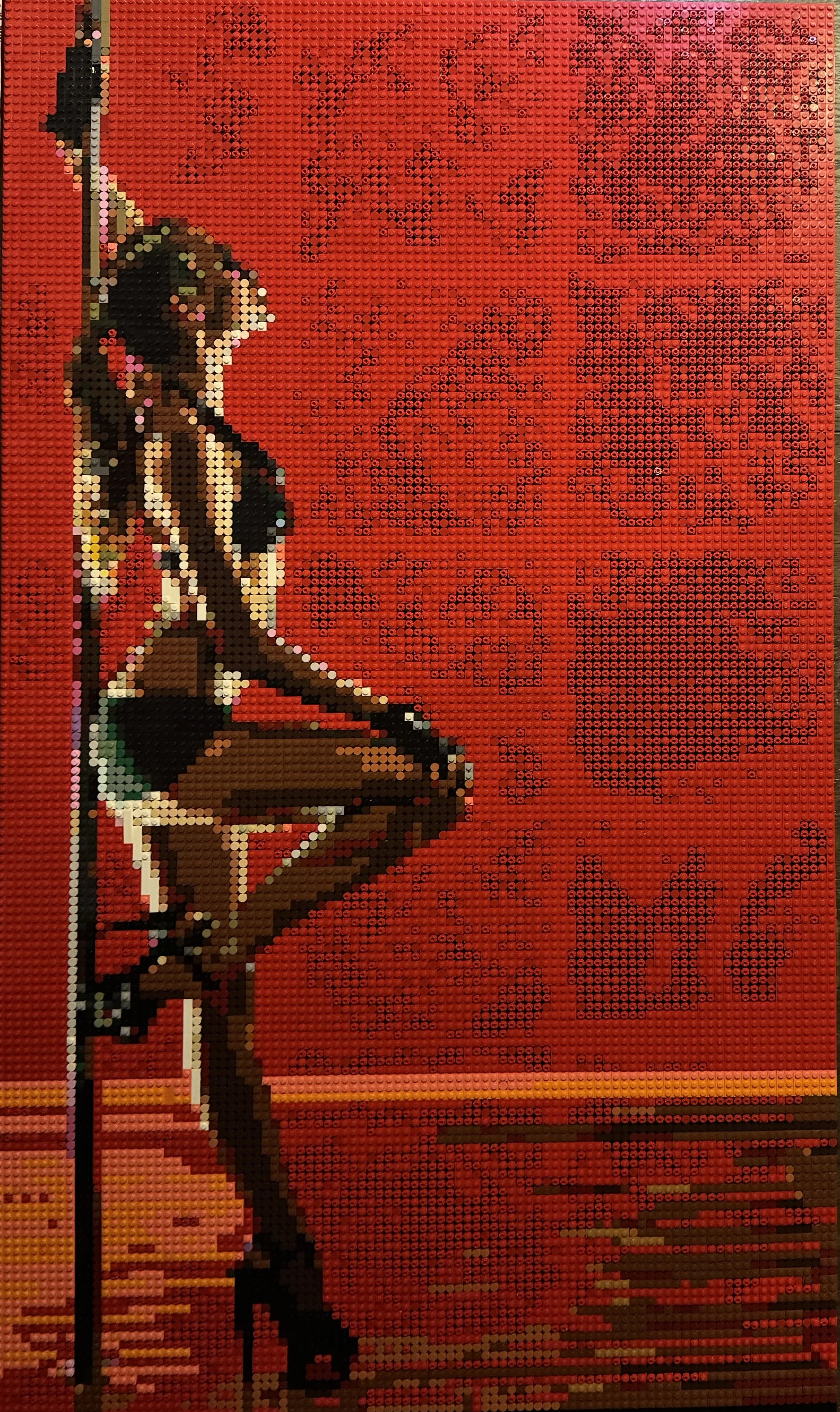
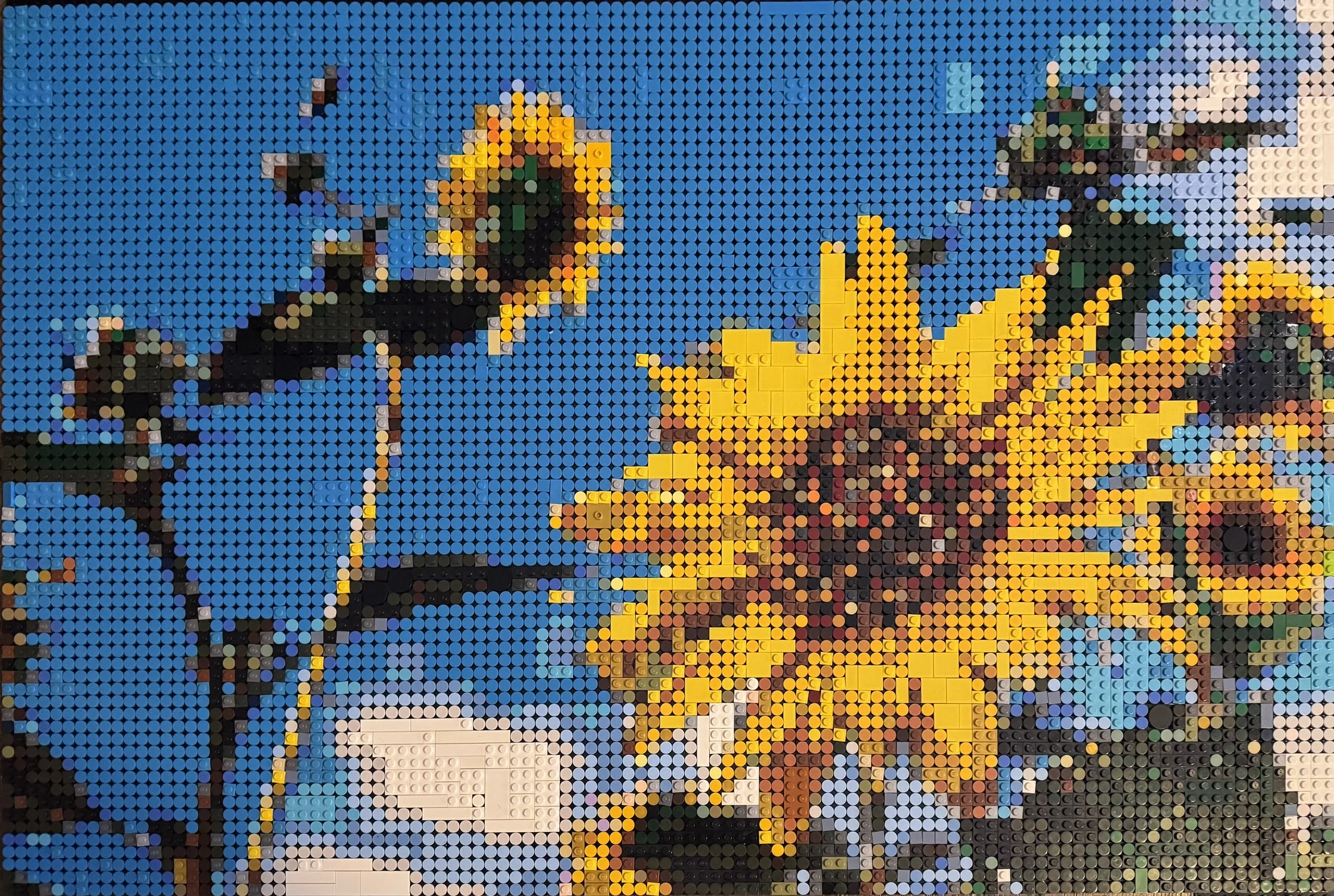
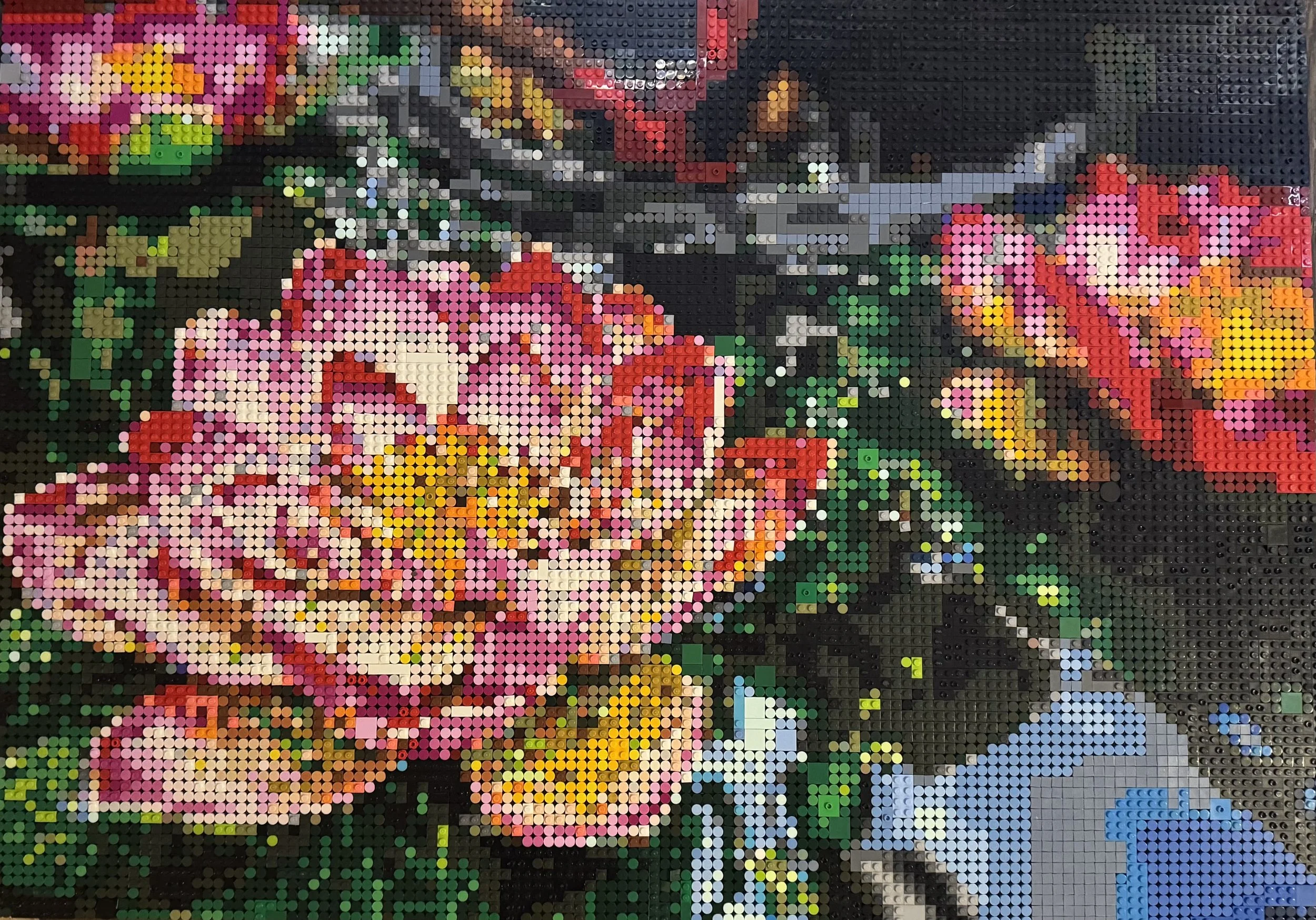
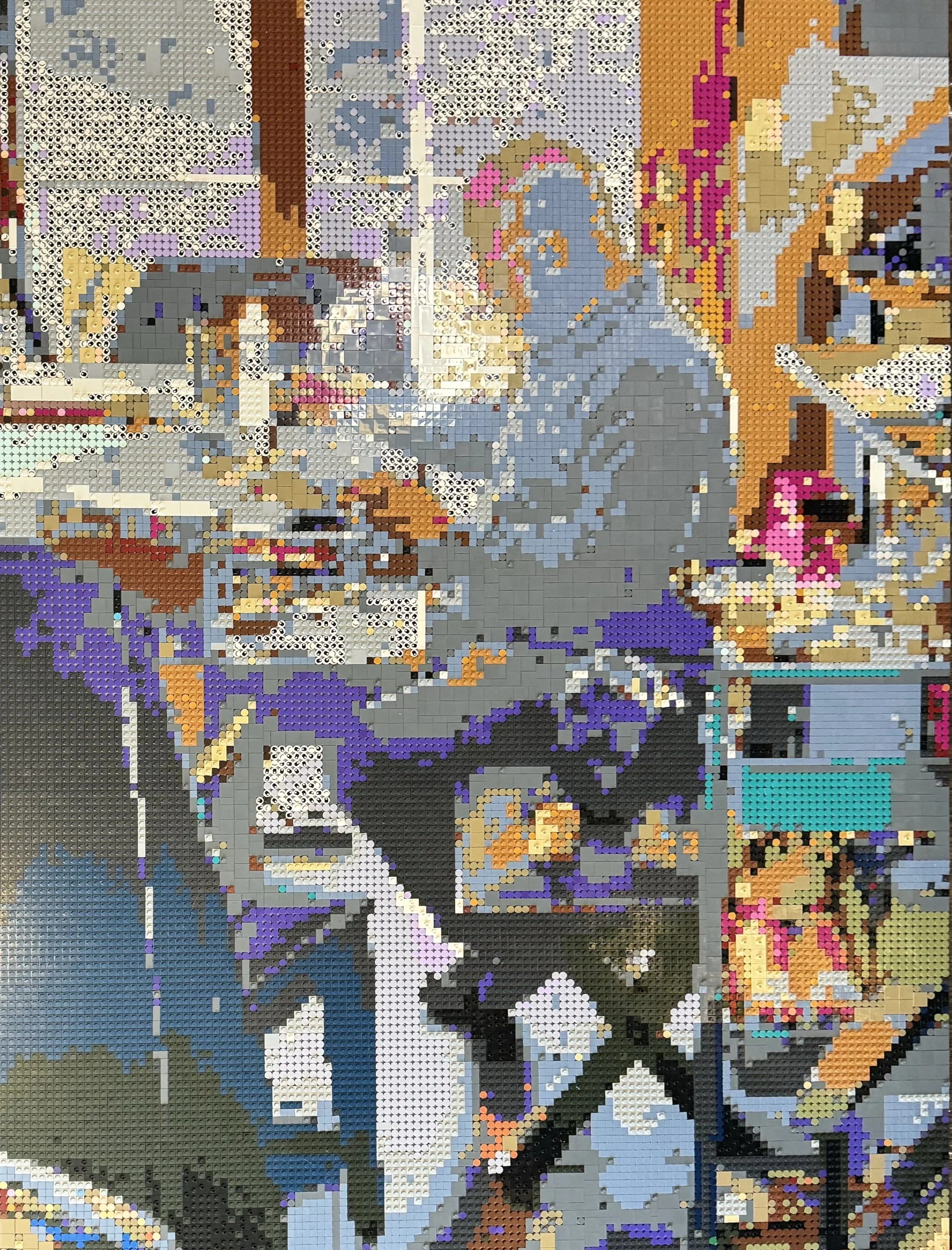
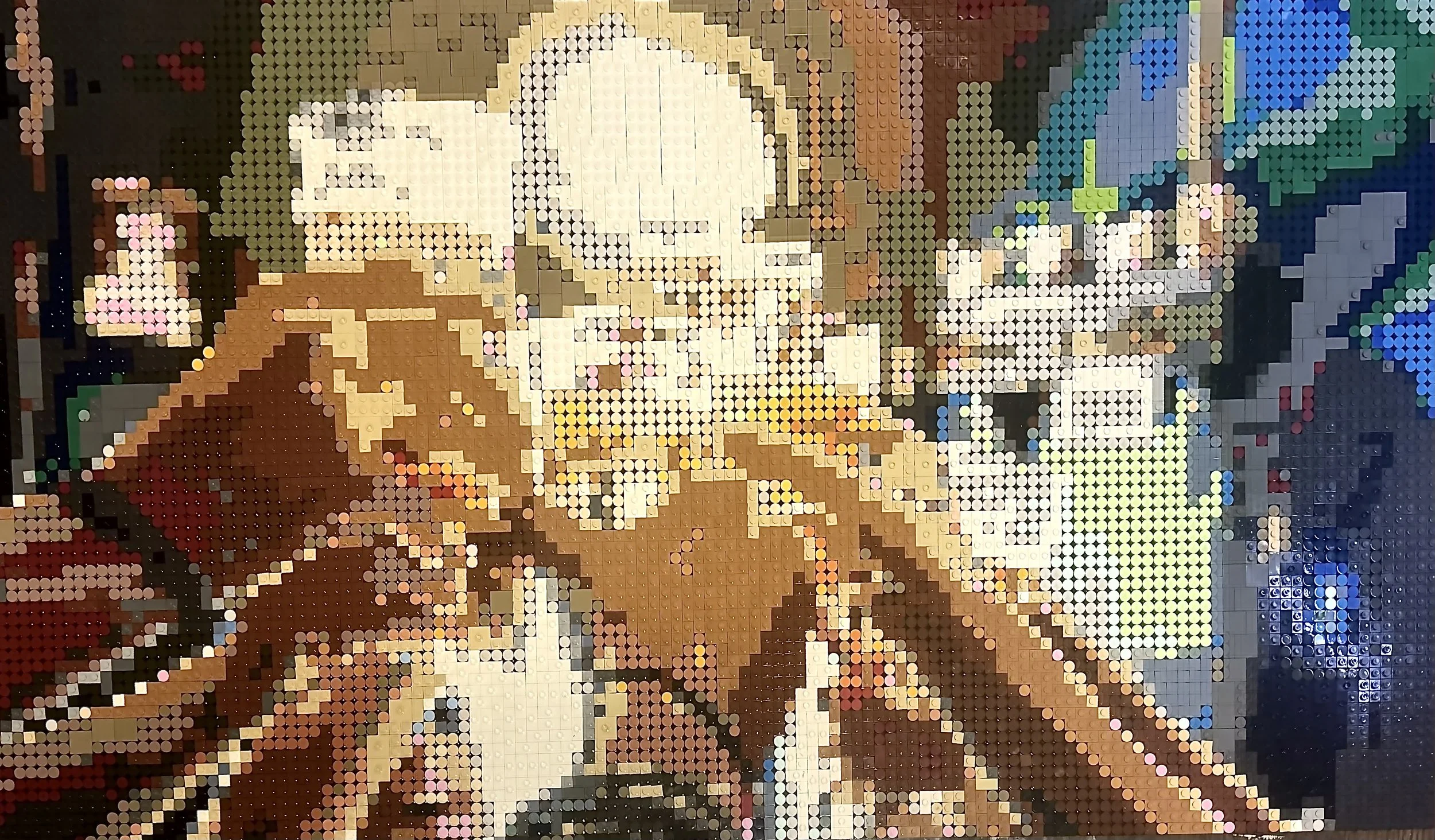
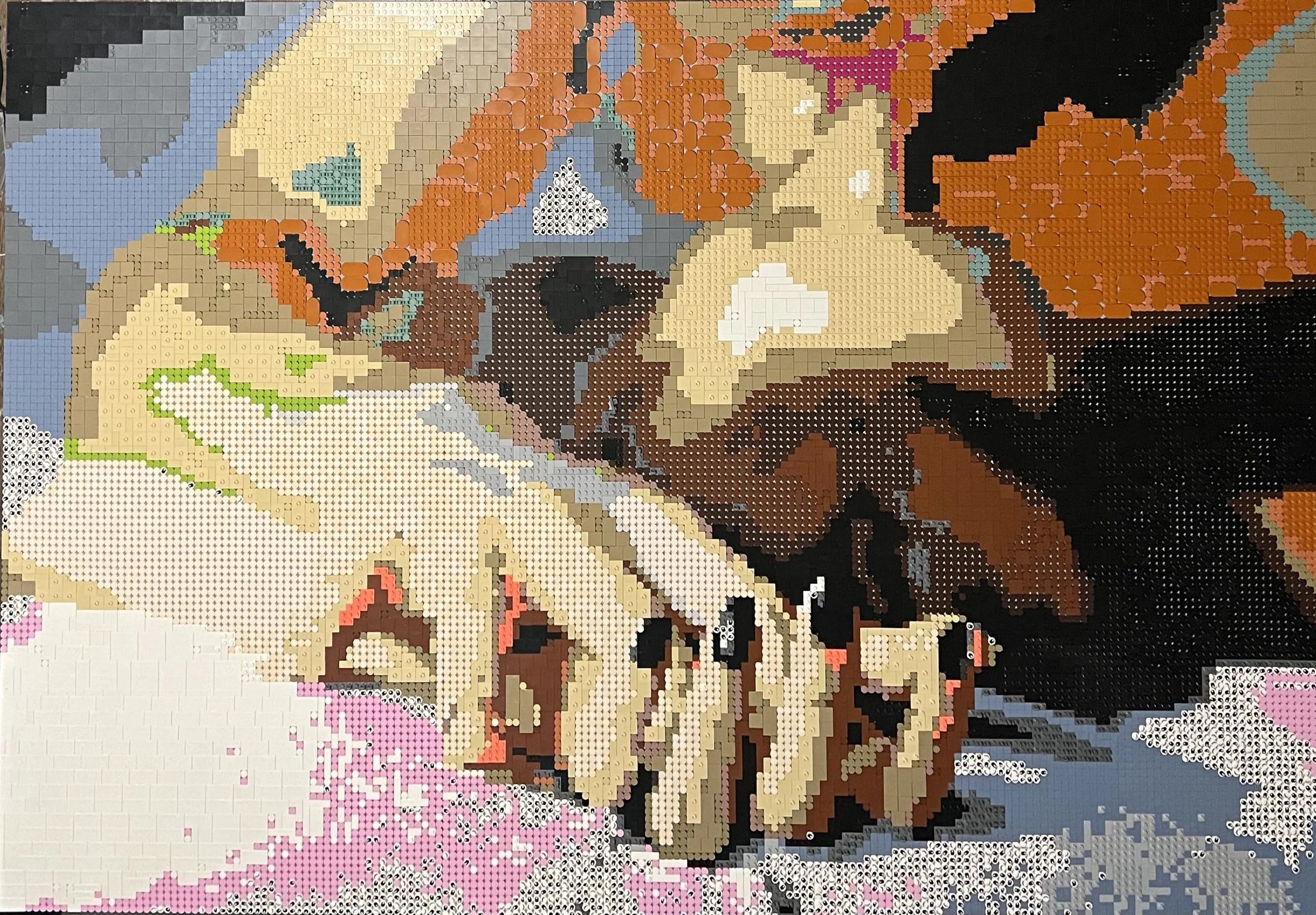
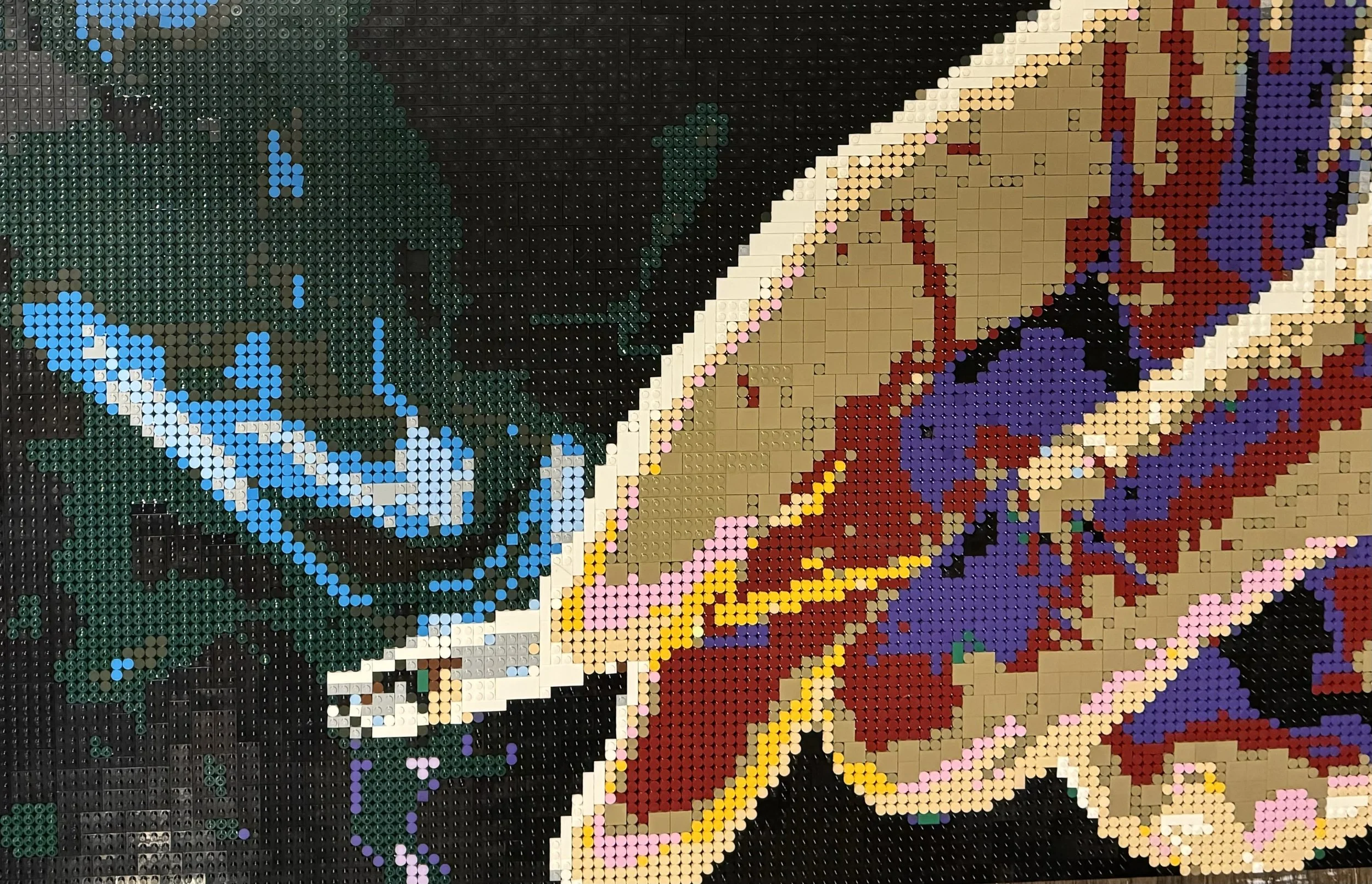
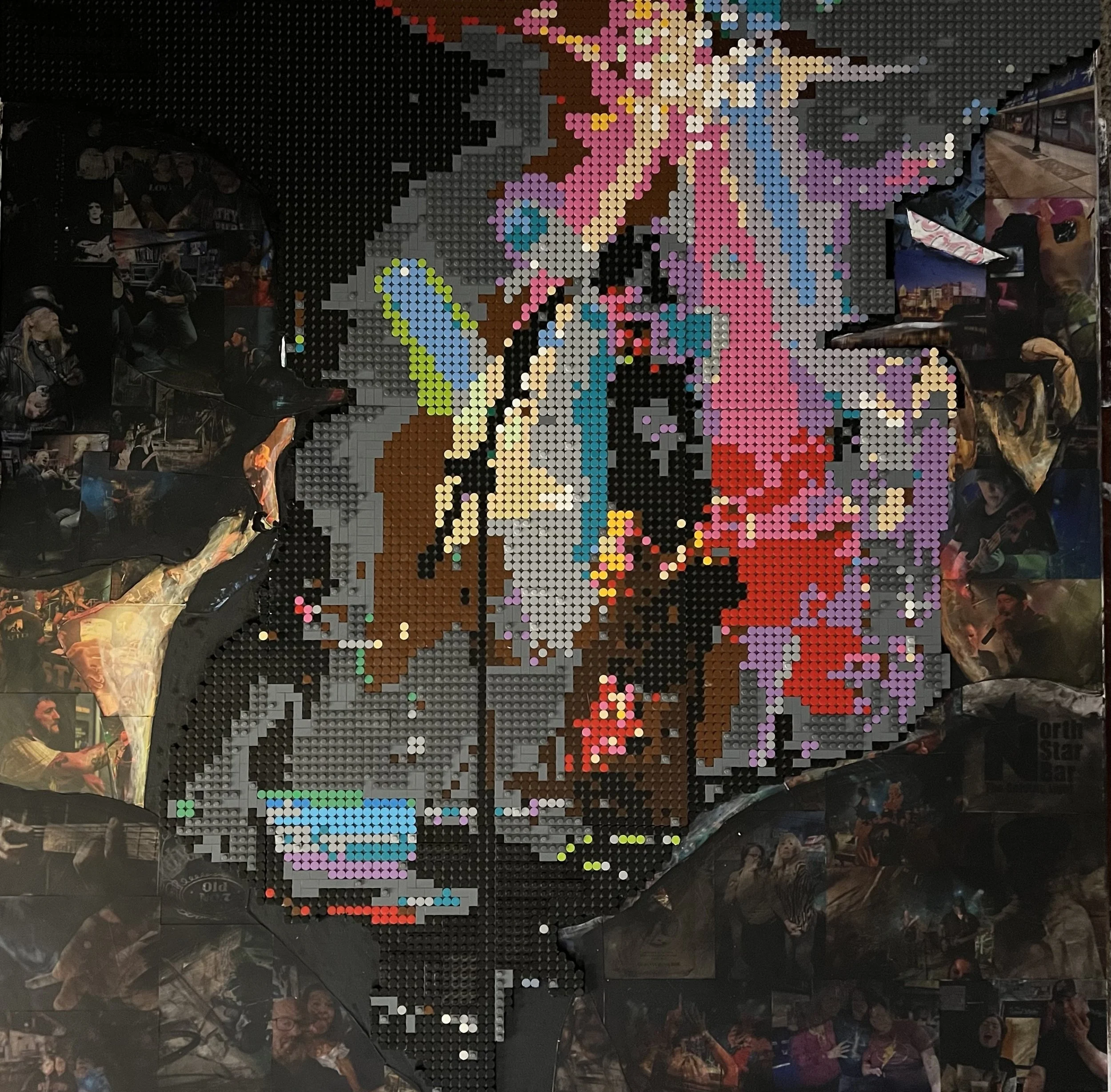
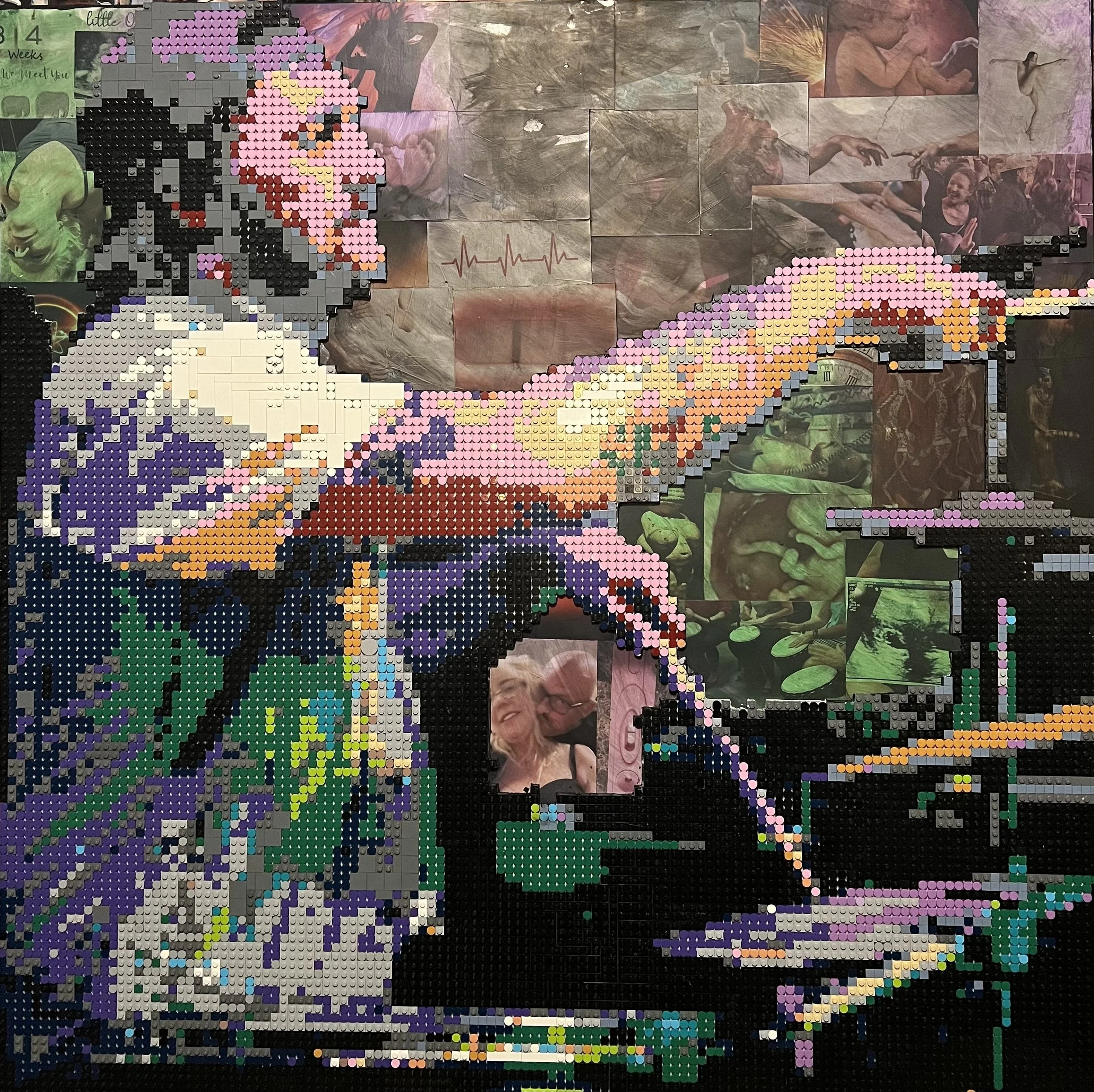
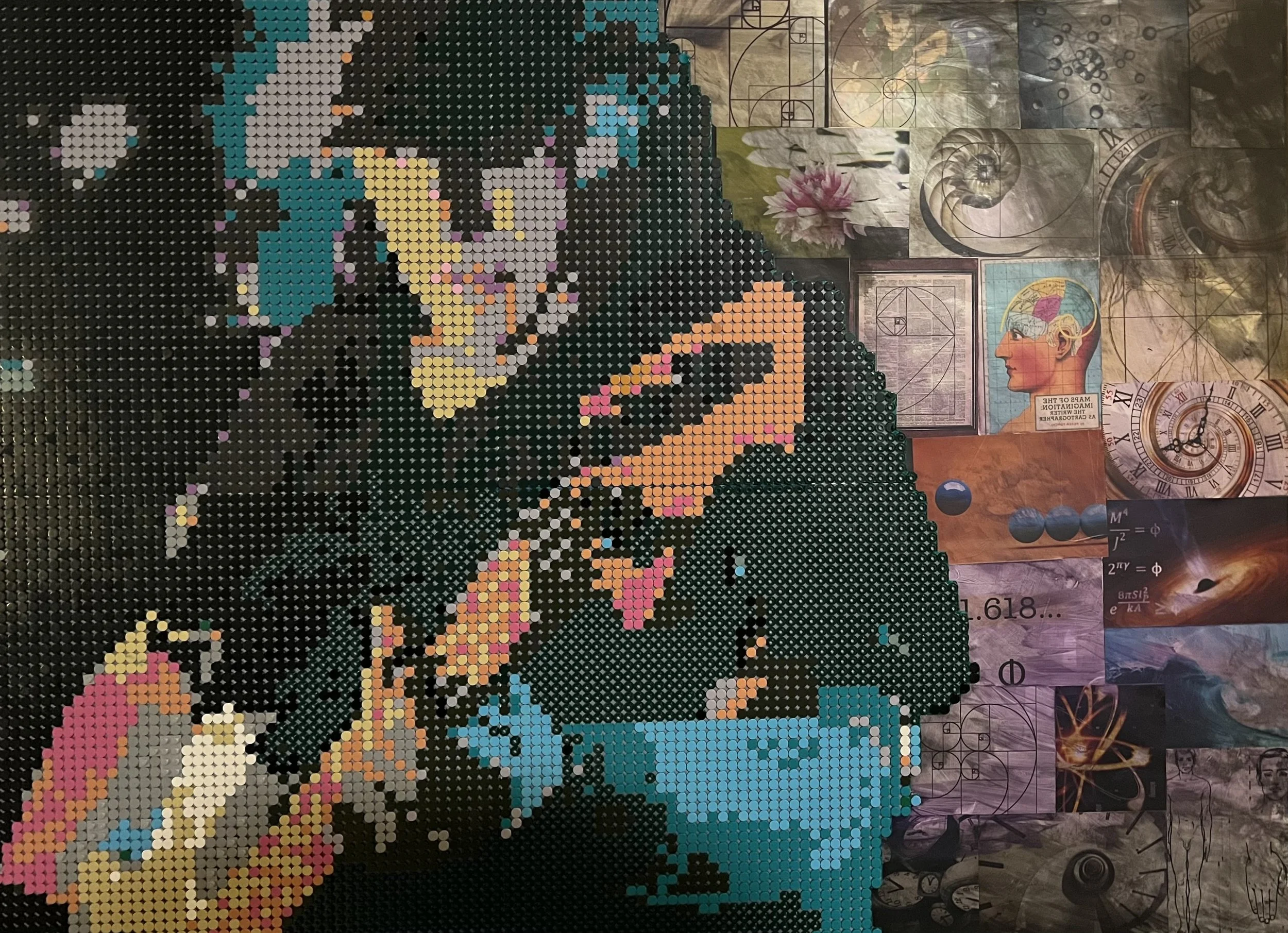
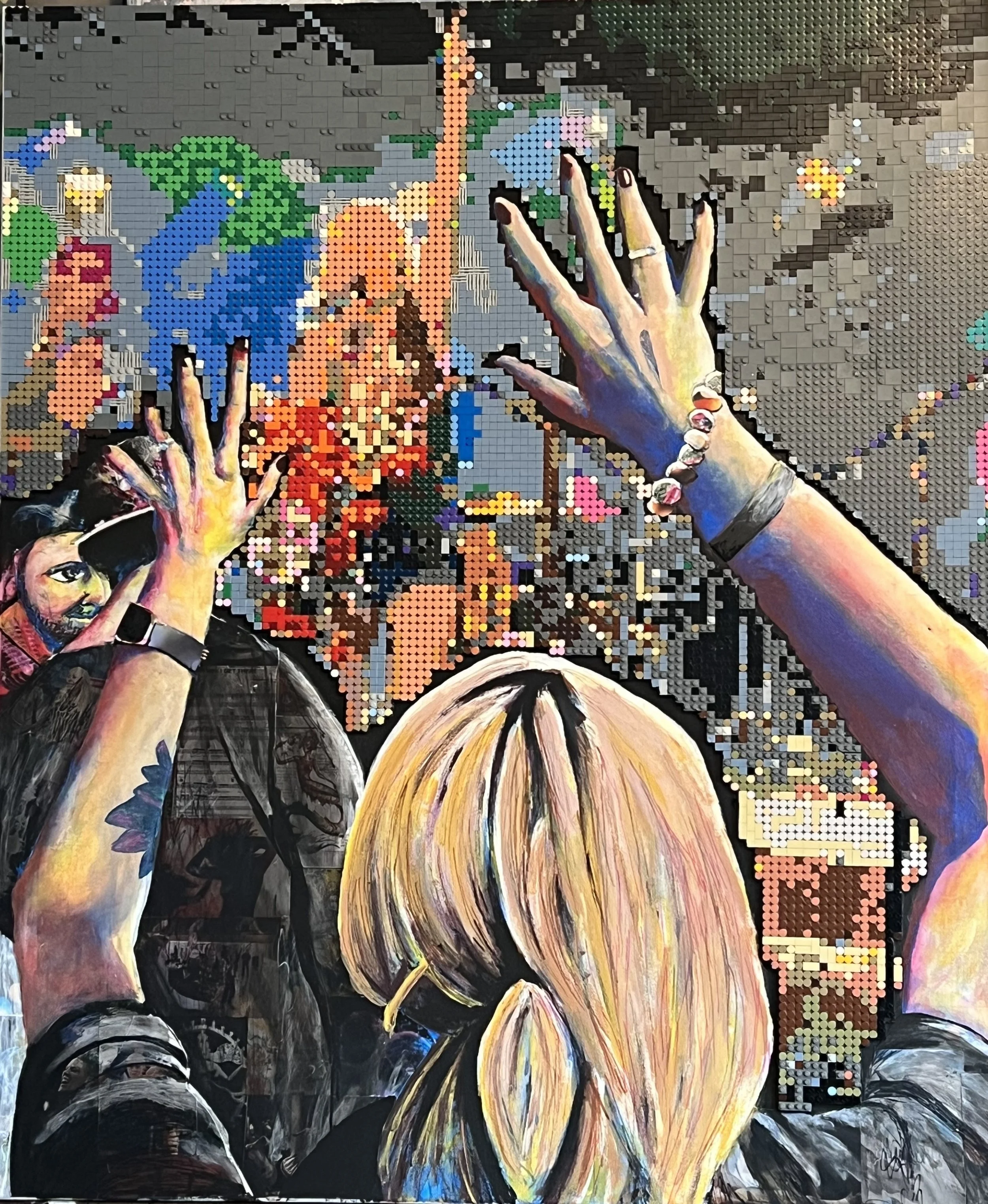
One of those items was a LEGO Mosaic set. You upload a photo to the LEGO website, and they send you a template to recreate it in tiny plastic studs. I bought one for her nine-year-old son — an image of him with his mom — and one for myself, of her and me. I expected a toy. What I discovered was a medium. Even with only white, black, grey, and yellow, the result was astonishingly photorealistic. I immediately wondered: what could I do with a full palette?
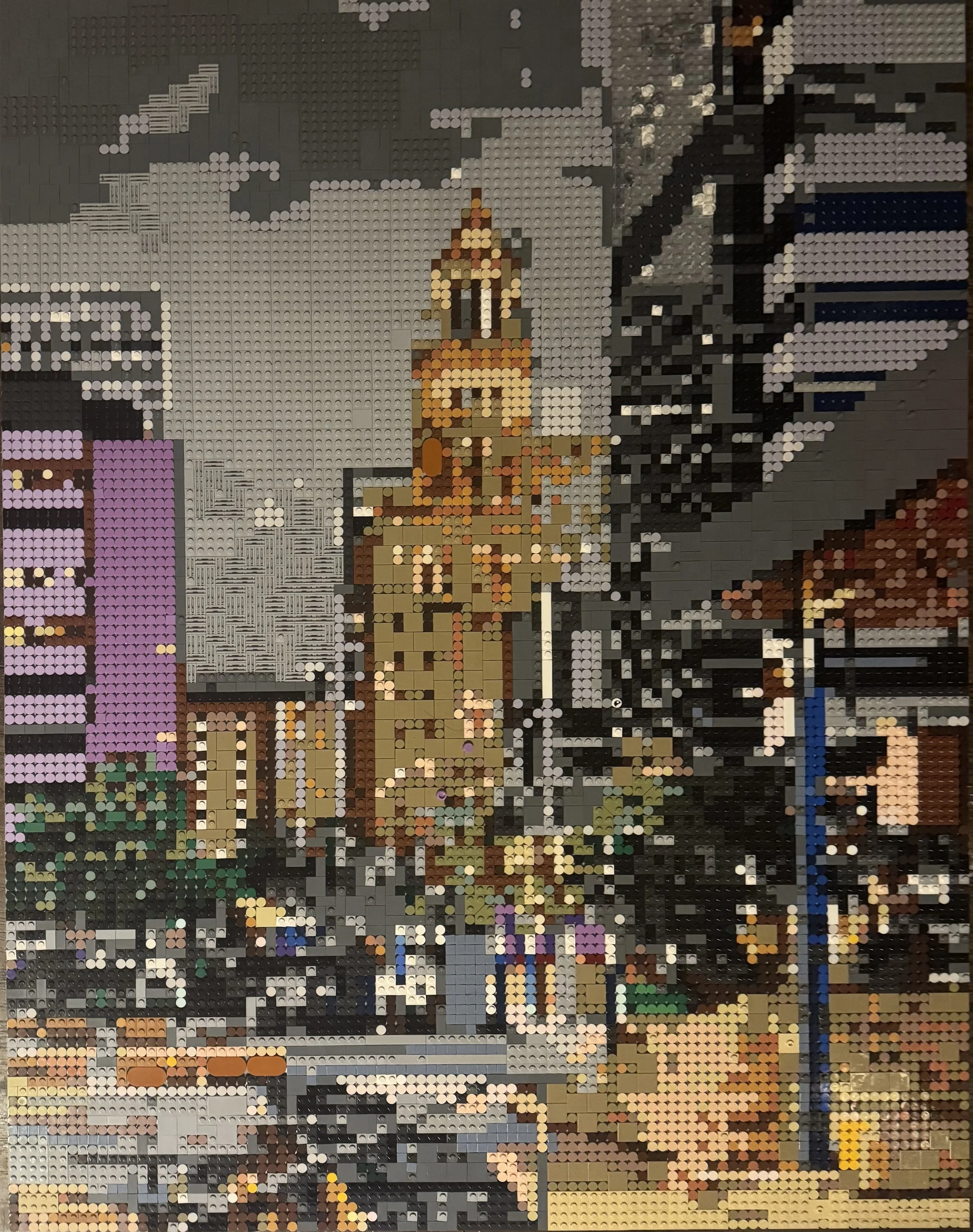
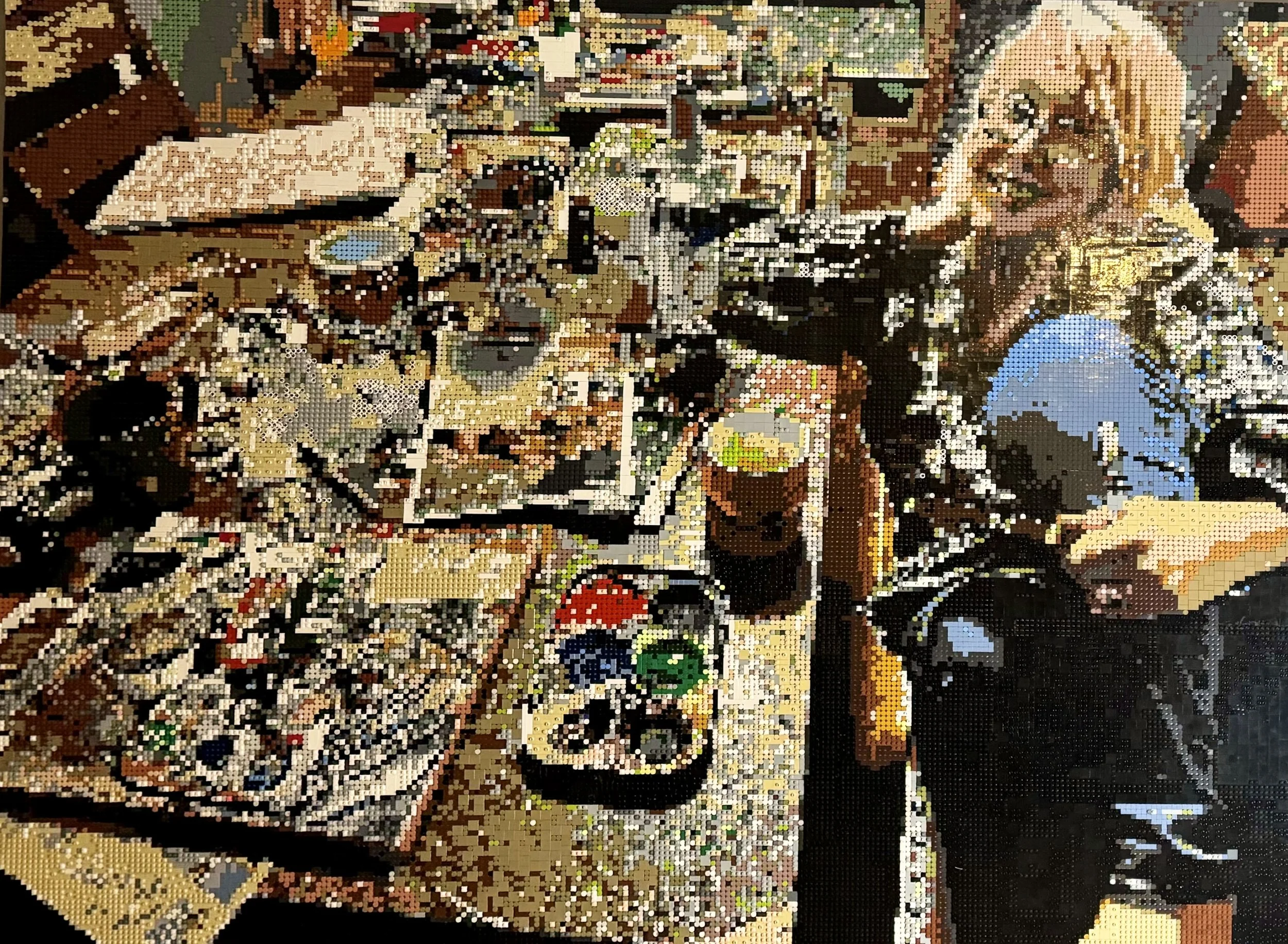
My first experiment, Sunday Evening on the Rooftop of Kathy’s Pub, convinced me I was onto something. Where my collage paintings overload the canvas with information, LEGO forced me to strip things down — like becoming a human dot-matrix printer. From a distance, the pixels dissolved into image, just as Seurat’s dots, Monet’s brushstrokes, or the billboard misprints I once wallpapered my college house dissolved into illusion. I had even taught this principle to students with marker dots: up close, abstraction; from afar, coherence.
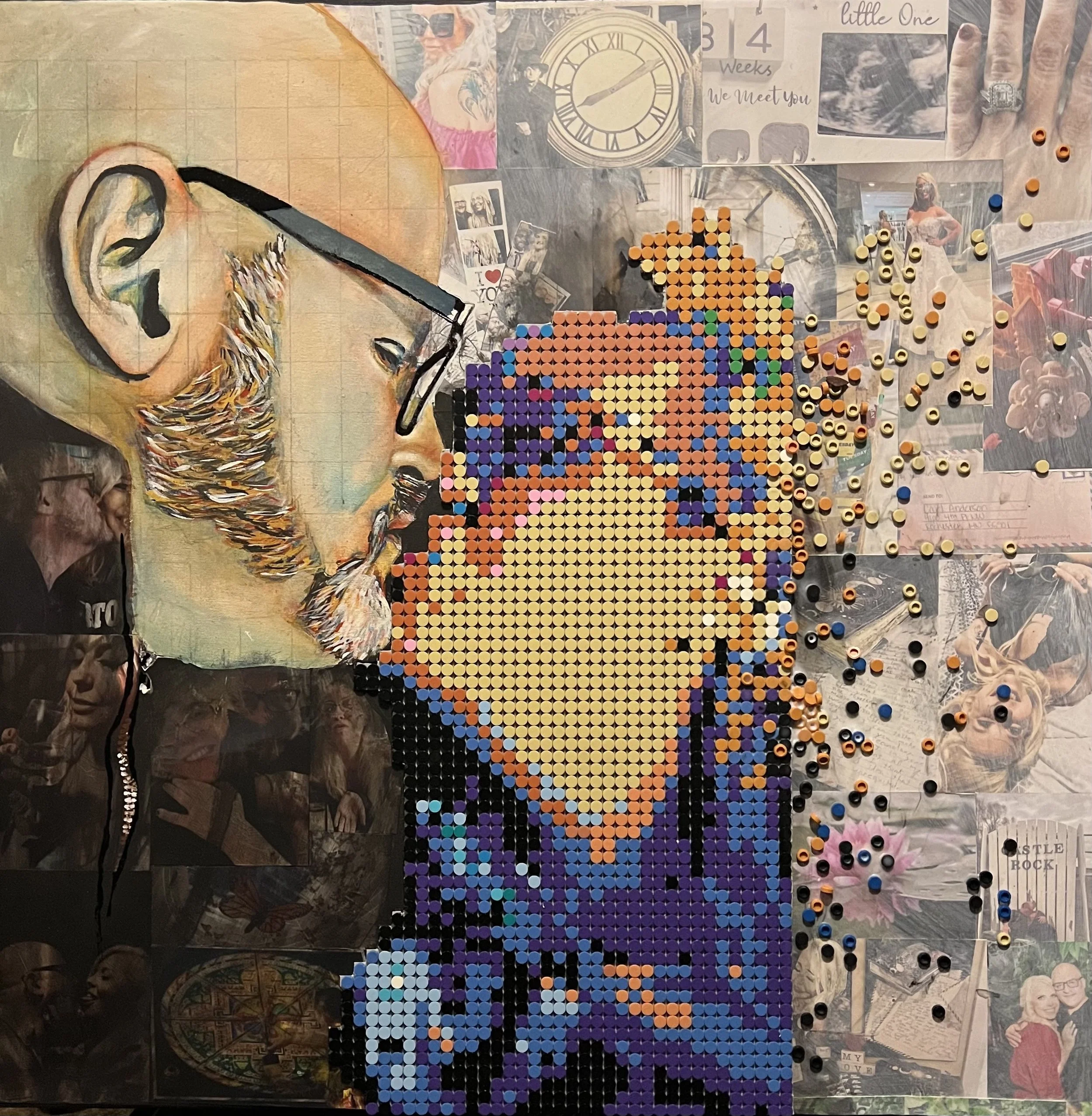
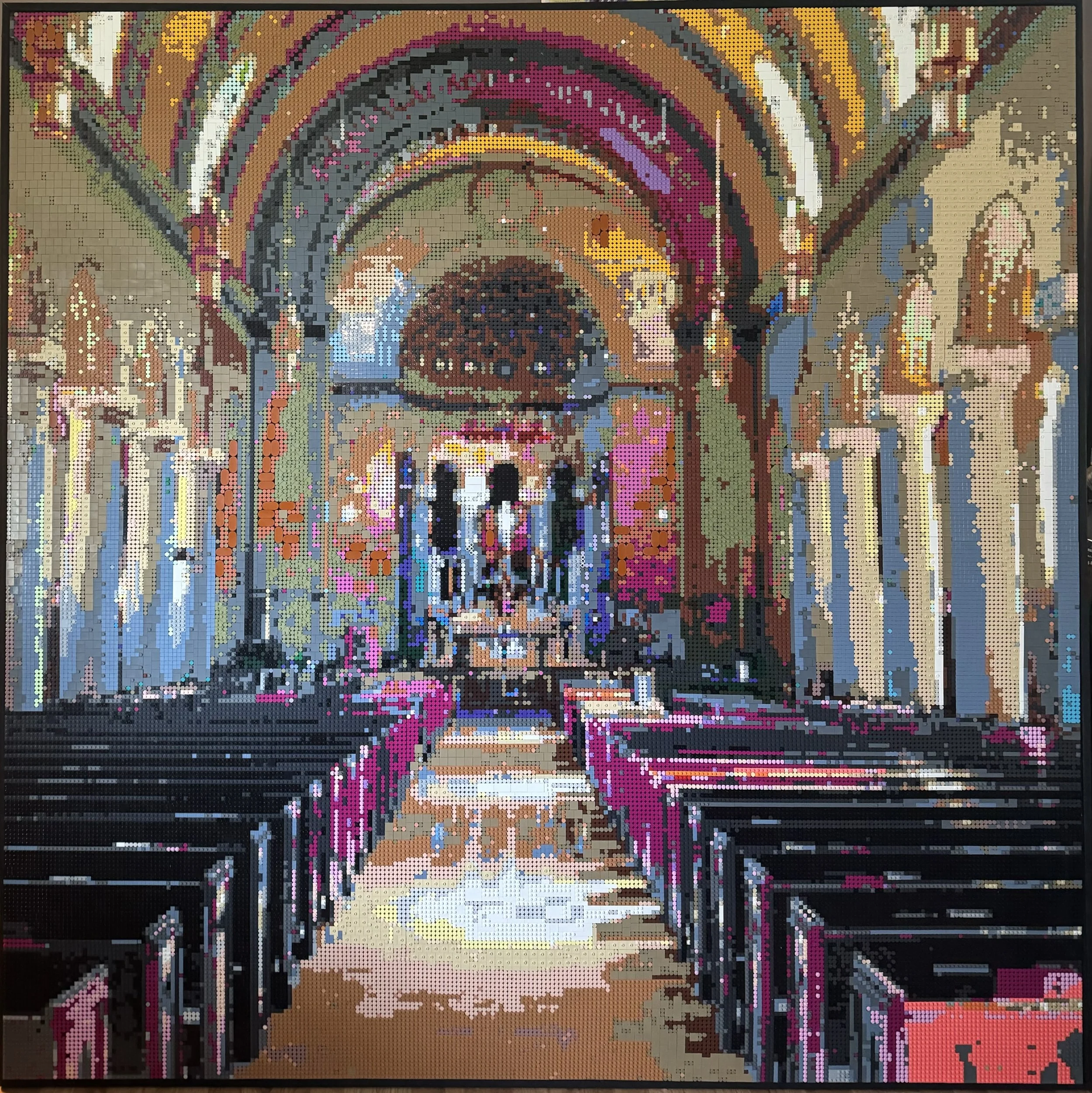
But LEGO carried an added tension. It is marketed as a child’s toy. To use it to render images charged with adult grief, memory, and loss felt like breaking a rule — which made me want to break it further. Most LEGO artists I found online played it safe, flat and graphic. I wanted depth. I wanted perspective, atmosphere, focus. I wanted the medium to breathe the way paint does.
If my collages are a wide-angle lens, my LEGO mosaics are a microscope. And the contradiction — building adult mourning with a child’s toy — is exactly what keeps me here.
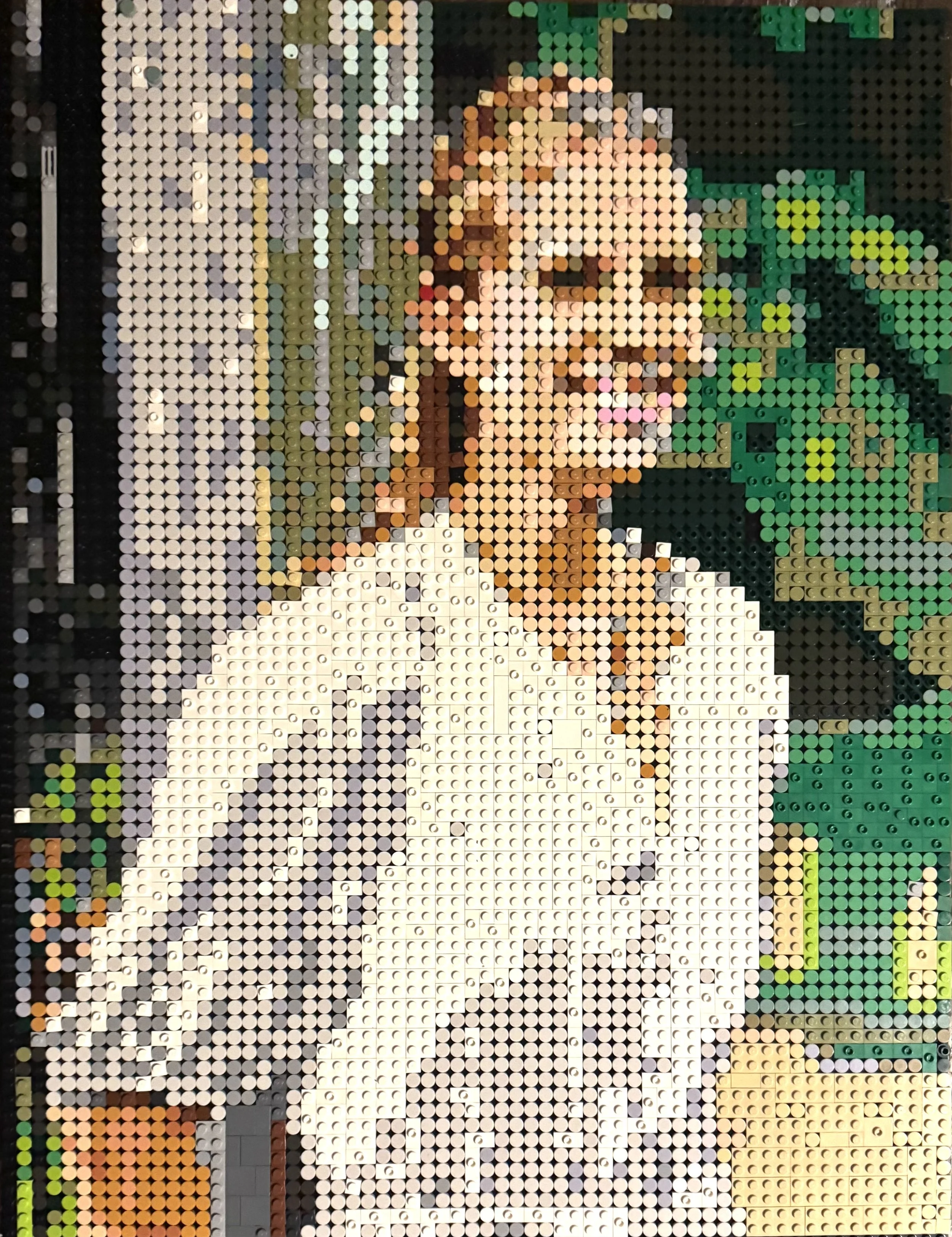
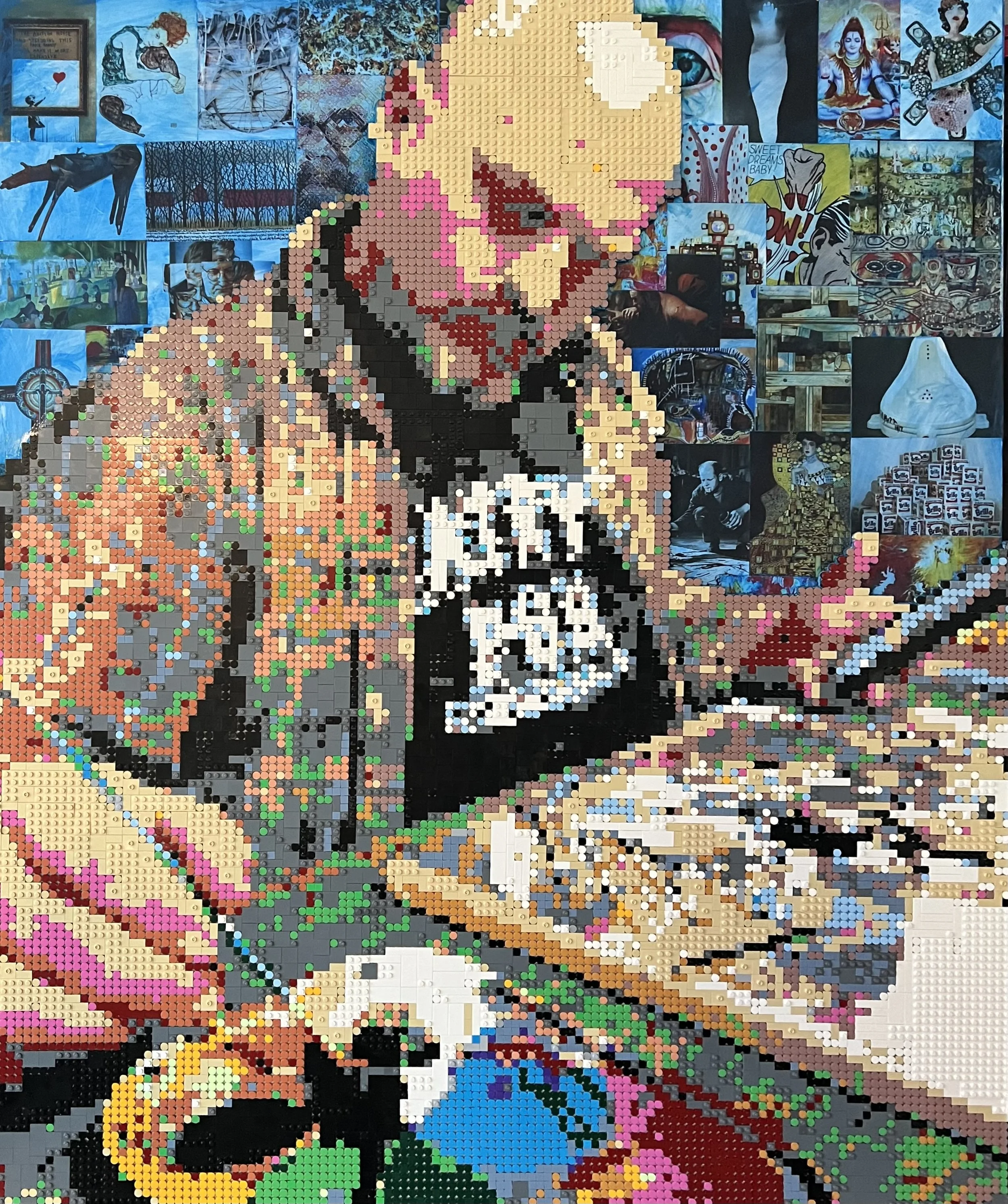
Which brings me back to the subtitle of this book: Why Don’t You Paint Anymore. Once I felt I had mastered the LEGO medium, I set out to construct a lasting tribute to the woman I loved — the woman who resurrected my art practice, and who, even after her death, handed me this new way of working. Why Don’t You Paint Anymore is also the title of my largest LEGO mosaic to date: a rendering of my favorite photograph of Samantha. She is wearing my flannel shirt, seated beside me while I paint. It is one of the rare images I have of her without makeup, and perhaps the most honest.
The choice of medium feels inevitable. LEGO is made of ABS plastic — stronger than most materials in my home. These pieces will outlive me, outlive my paintings. They are durable and long-lasting, just like her impact on my life. And yet they are also fragile, held together only by tension. At any moment the image could collapse into scattered pieces, lost forever. Just like her life.