Principles of Postmodern Art
In 1999 I was issued my teaching license to teach k-12 visual art in Minnesota. At that time, and for most of my teaching career, the academic standards were largely influenced by an artworld defined by Modernism (Minnesota Department of Children, Families, & Learning, 1993). But let me back up many, many years to how those standards came to define our state’s curriculum.
In the mid 1800’s the artworld underwent a massive identity crisis with the invention of photography. Before then it was widely accepted that the primary role of the visual artist was to create images, but when that could be done with the click of a button that threw the whole business of drawing and painting into question. Of course images rendered through non-photographic mediums were always capable of carrying meaning that a simple snapshot couldn’t, but this solitary invention sent the art world in to well over a century of self discovery as it flirted with various -isms (impressionism, expressionism, cubism, dadaism, surrealism, etc.).
By the end of the 20th century Modernist ideology, or at least that which dominated the academic thinking that produced our curriculum standards, had watered down and broken art down to what was found essential; primarily the elements and principles of art and design. However, what I saw in galleries and museums as well as what I was playing with in my own art, seemed to be exploring something else. Then, in 2004 I attended an art teacher workshop at the Perpich Center in Golden Valley, MN lead by Olivia Gude from the Univeristy of Chicago where she proposed an early concept of what she fashioned as the Principles of Postmodern Art.
Where the elements of art (line, shape, color, value, texture, space, and form) could be defined as the physical building blocks of visual arts and the principles of art (contrast, emphasis, rhythm, balance, unity, variety, and proportion) could be defined as how the elements are organized, the Principles of Postmodern Art went a step beyond and spoke to something else contemporary art, and arguably all art for eternity, was doing. It spoke to interpretive concepts and to me they gave visual art more academic relevance.
These Postmodern Principles include concepts such as:
• Juxtaposition
• Appropriation
• Recontextualization
• Layering
• Gazing
• Interaction of Text and Image
• Representin’
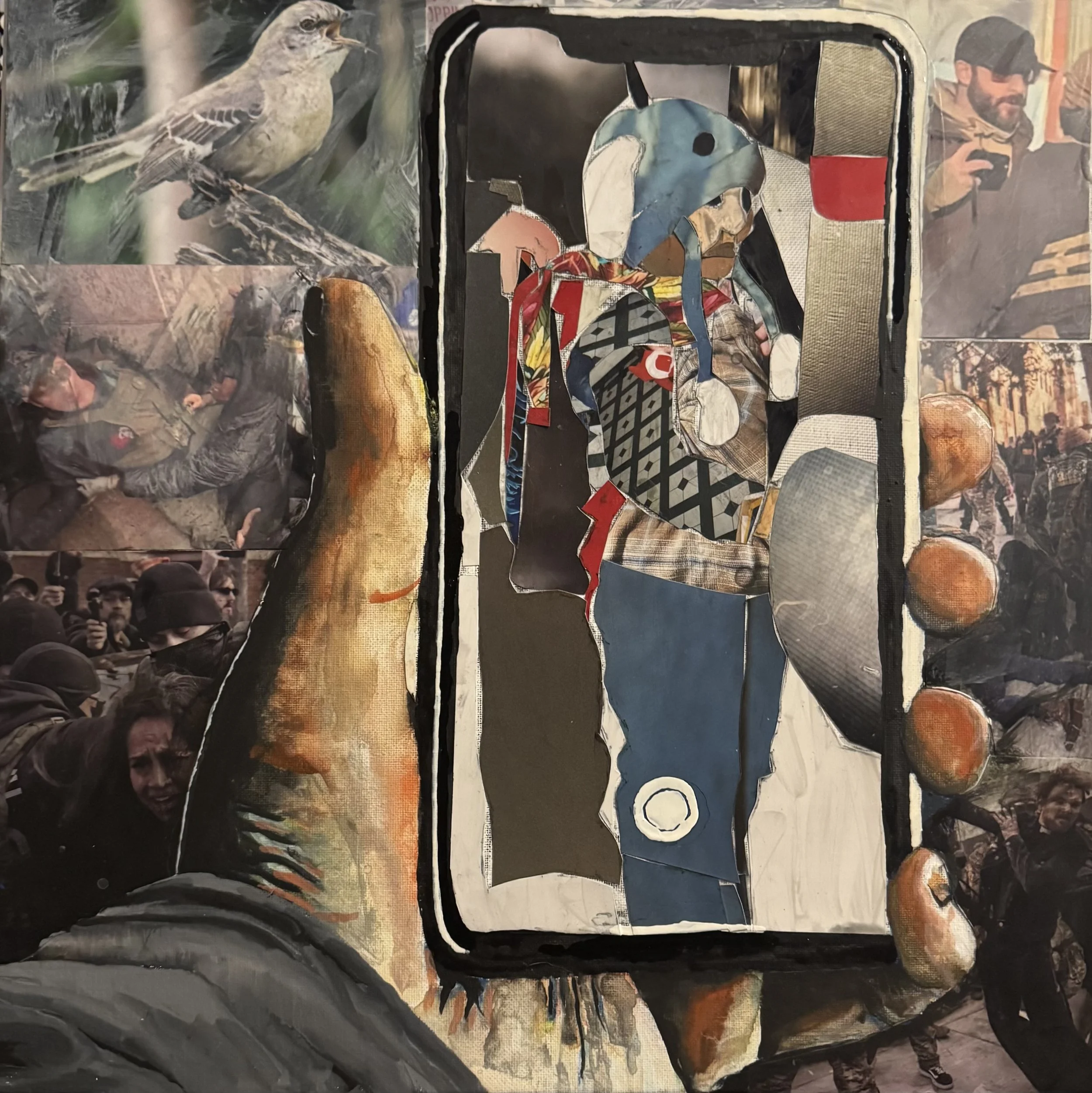
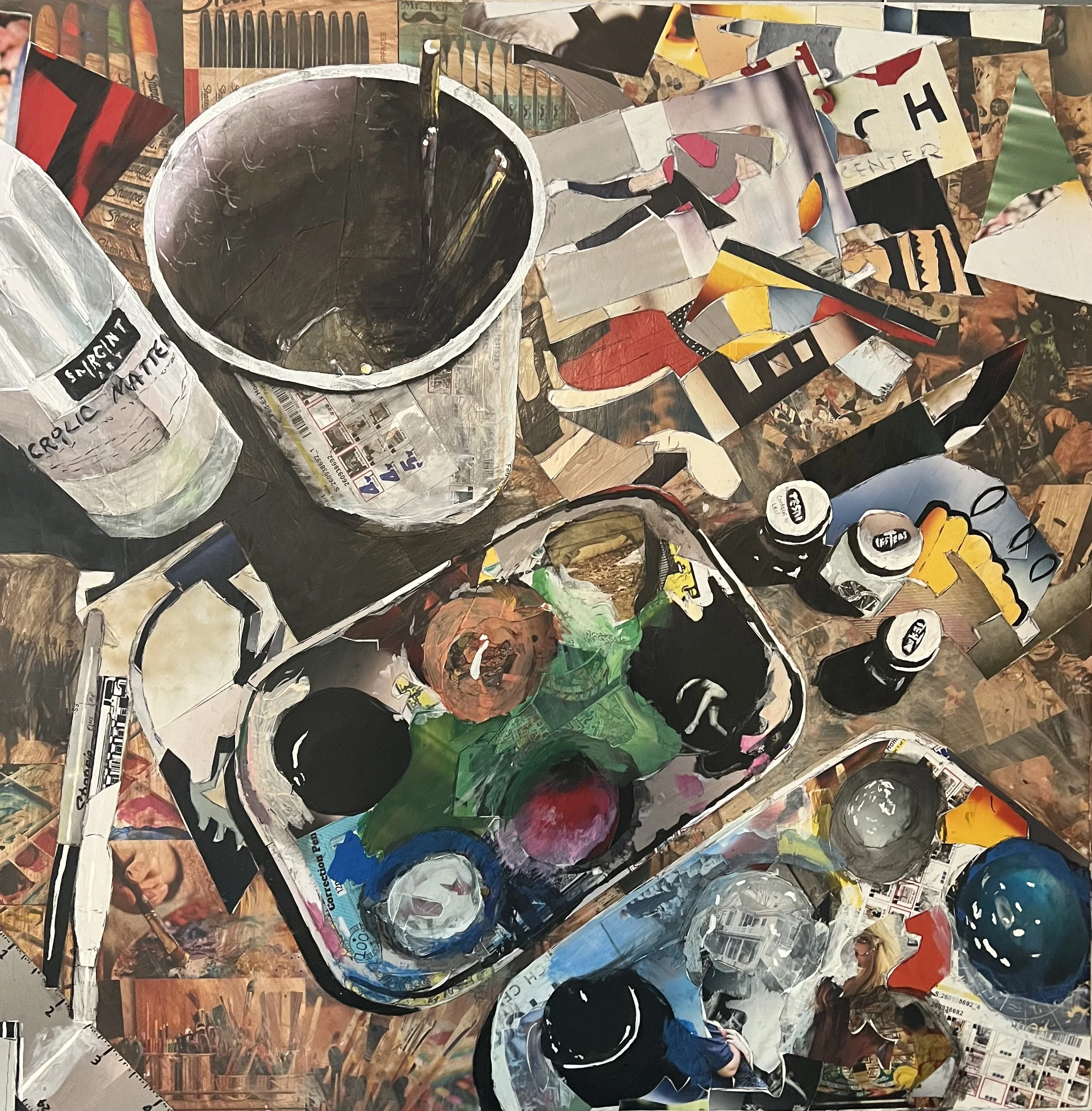
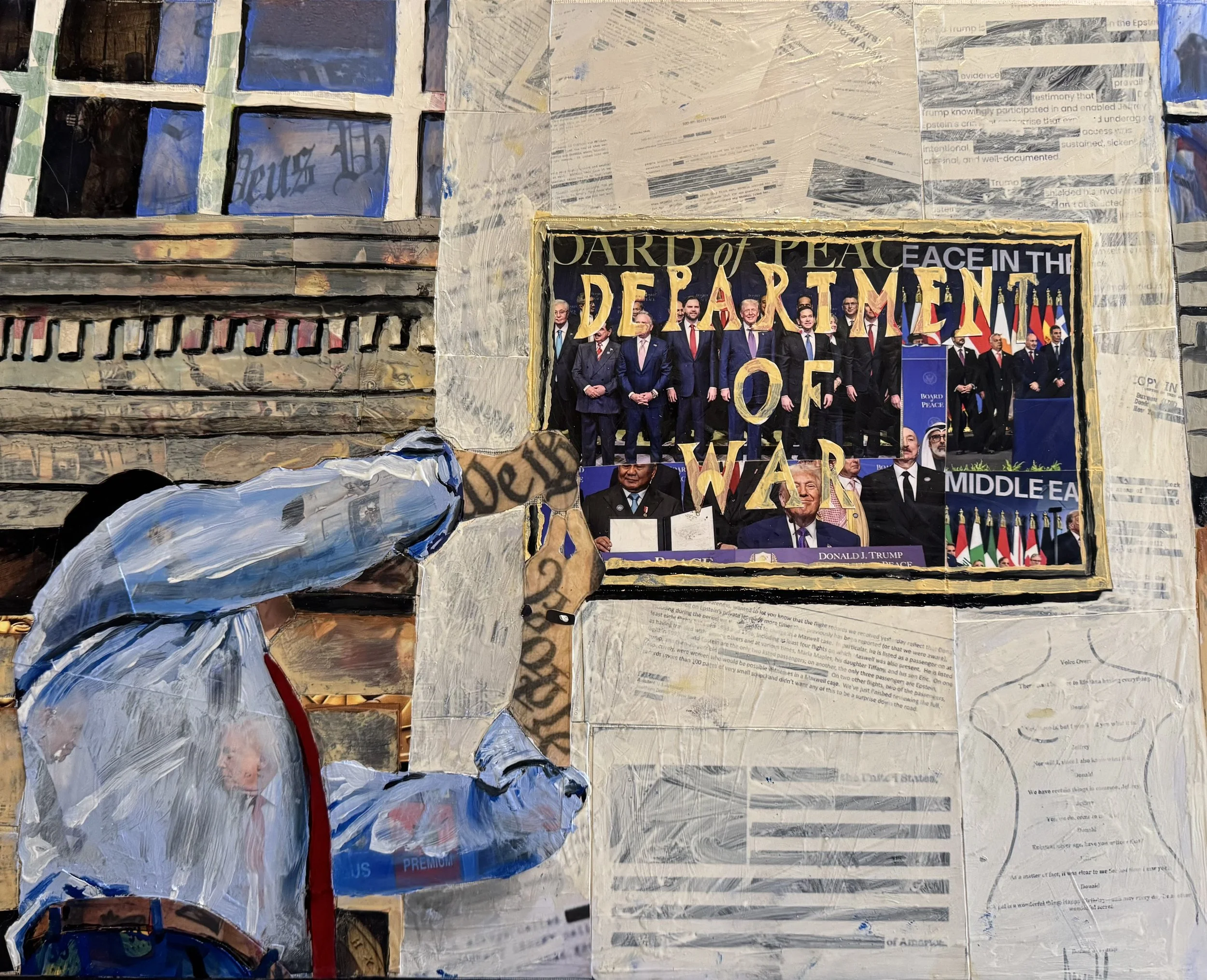
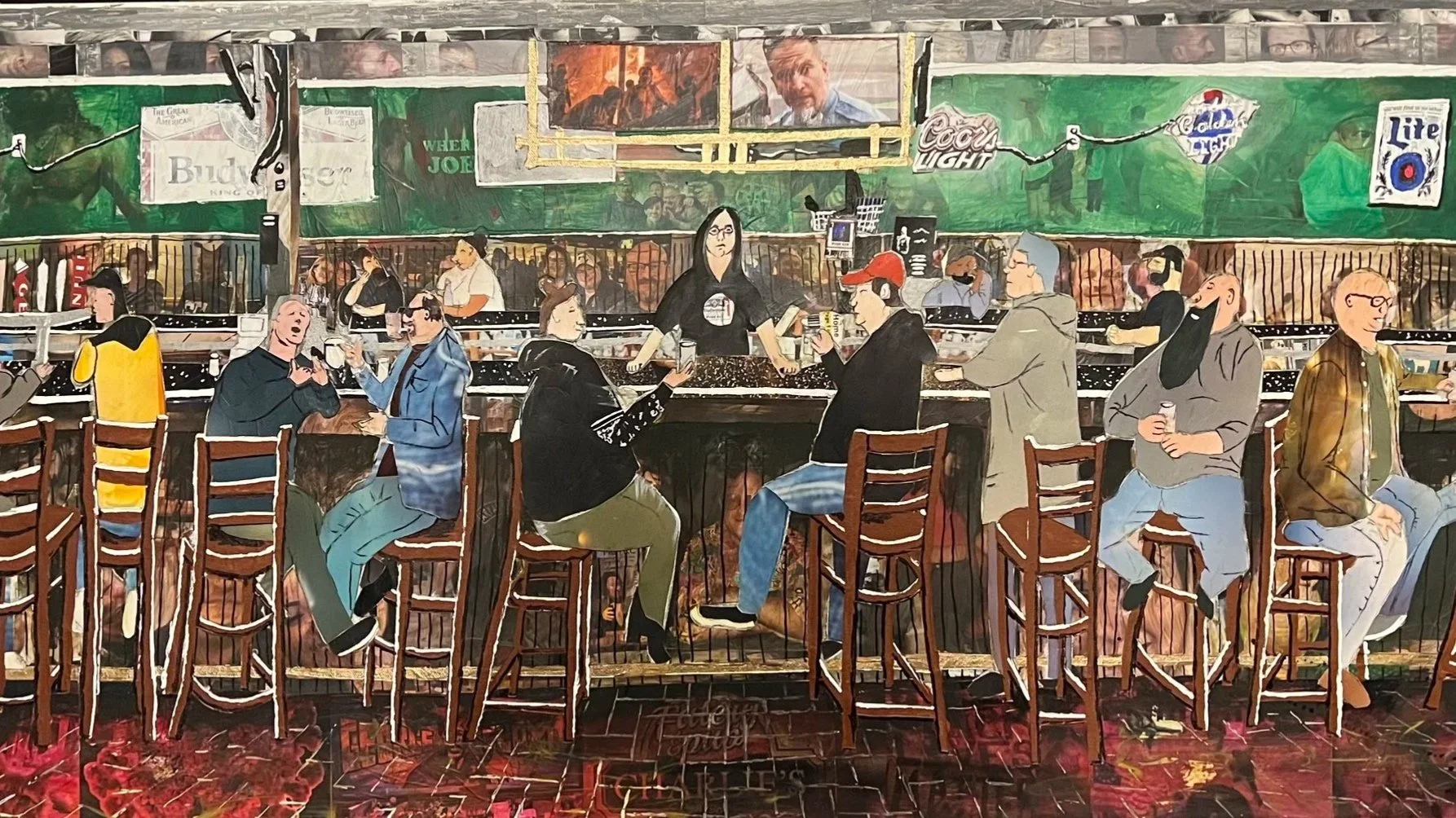
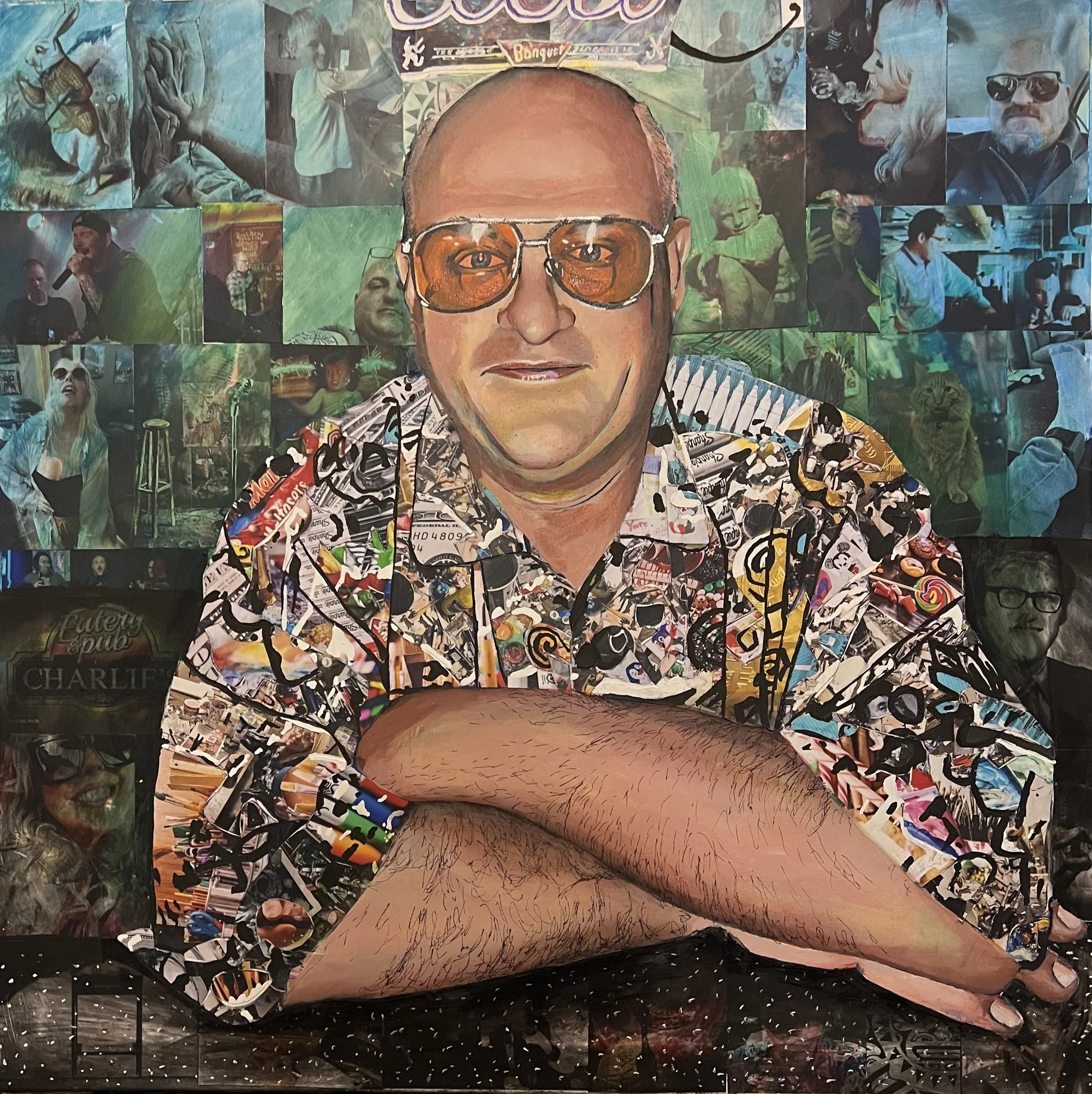
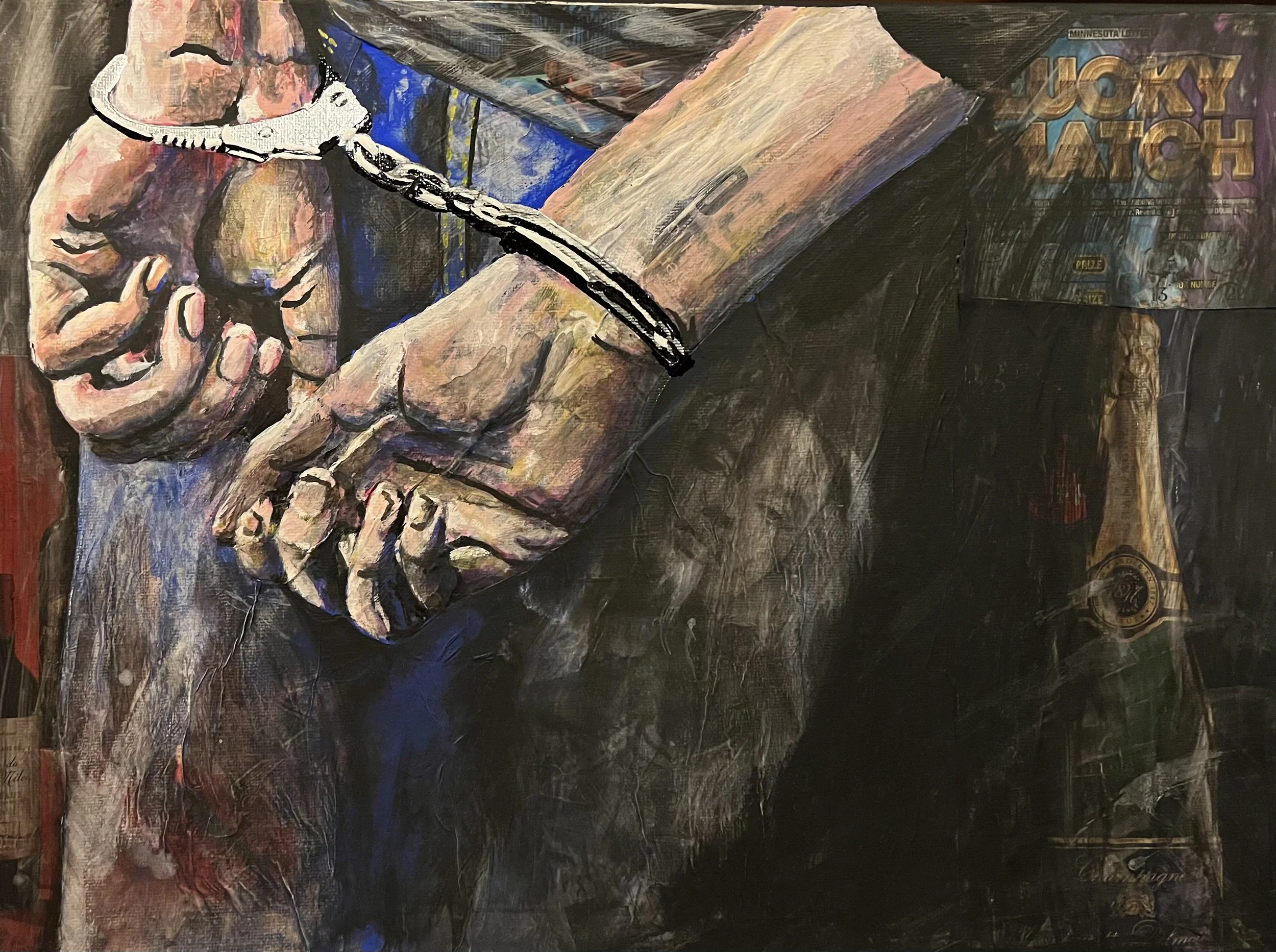
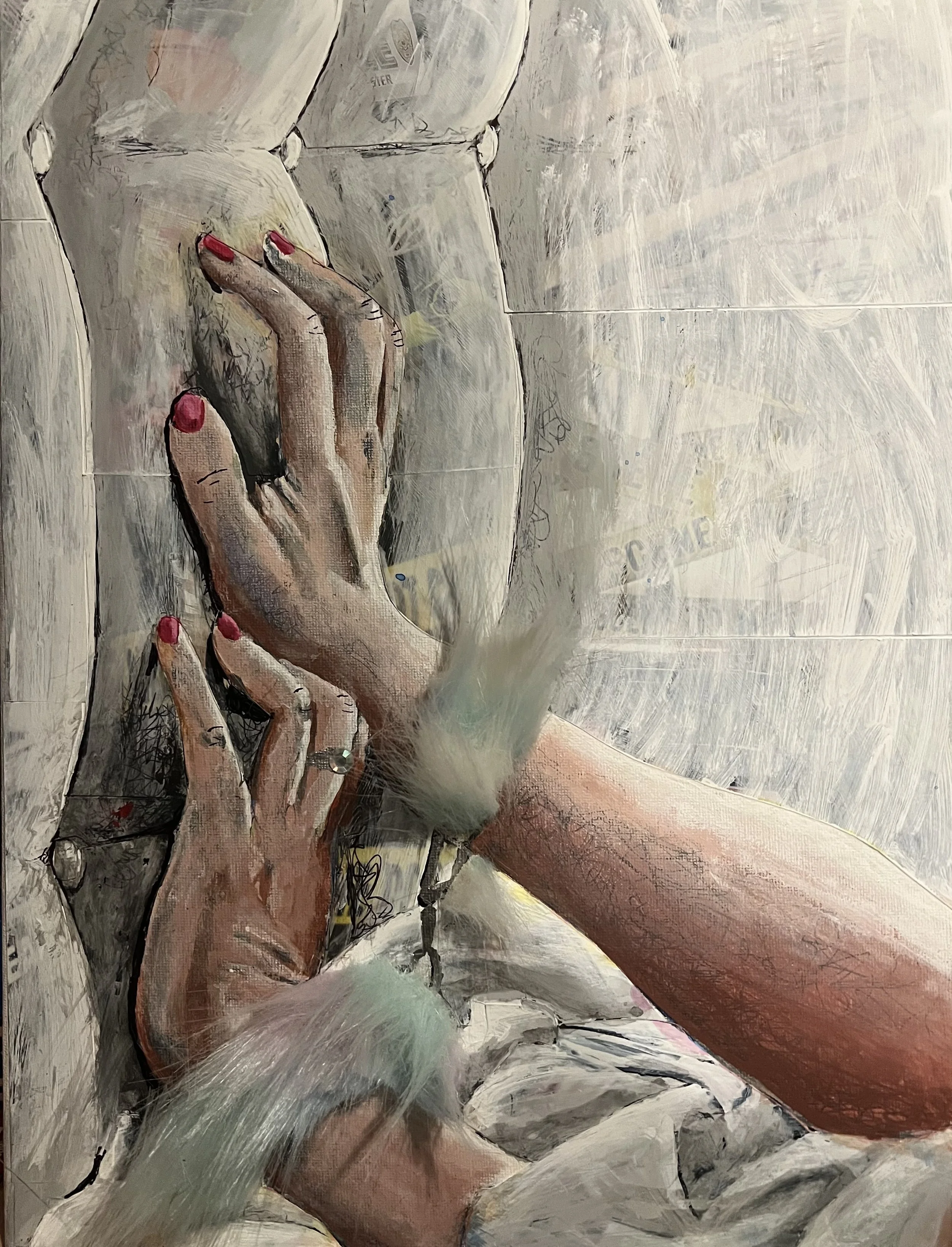
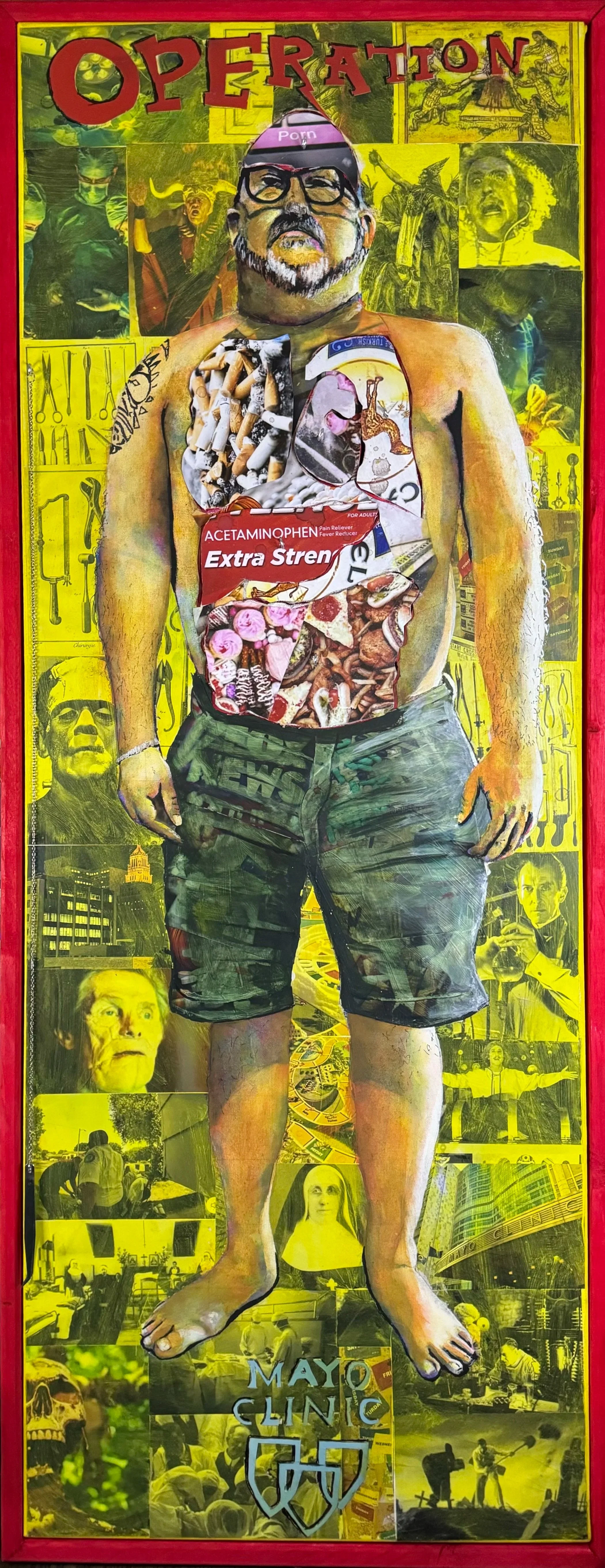
Gude had given me a new language for an artworld with which my collage paintings fit perfectly. I became hyper aware of how these concepts were playing out in my own work and also set out to write a curriculum for my students that leaned more heavily on exploring these concepts than simply resting on what the state department of education determined to be the focus. That focus to me was a bare minimum and my students deserved a more robust curriculum than that.