Early Work
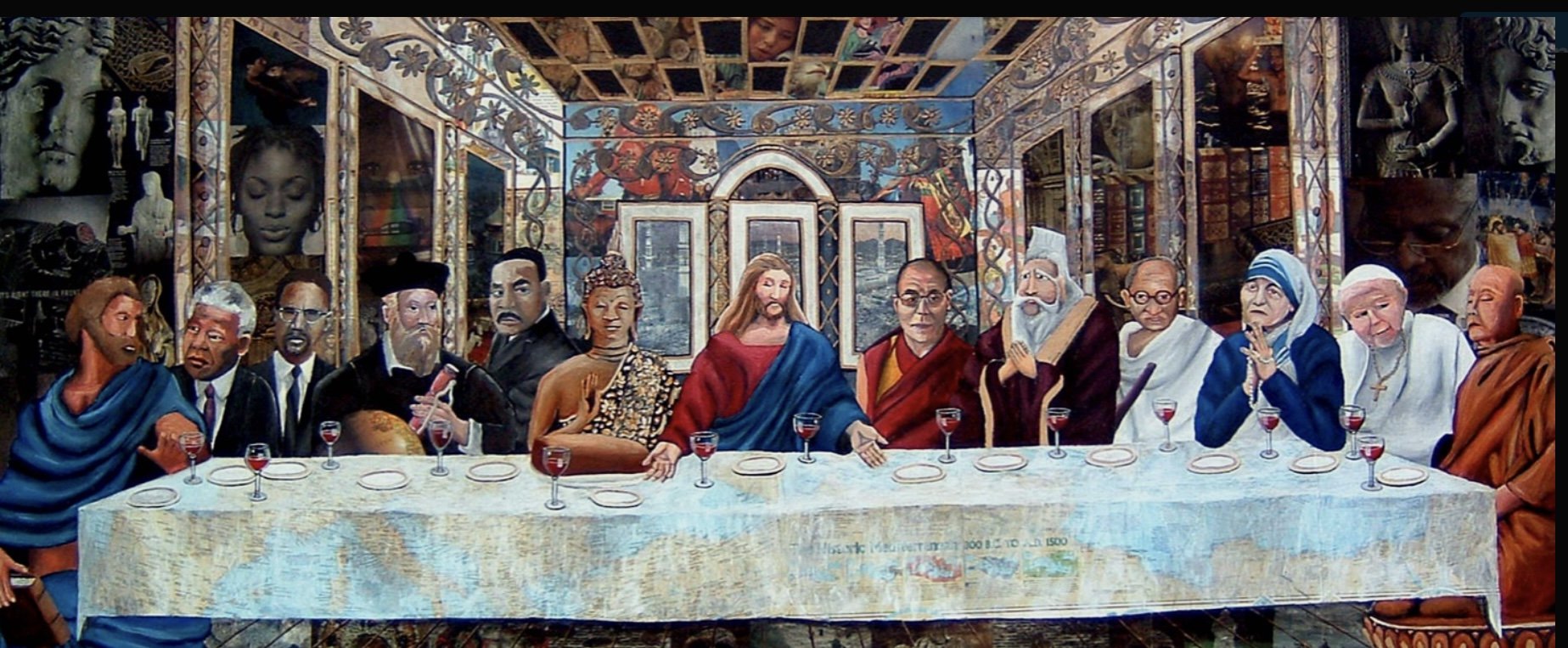
Collage has been a signature element of my artwork since the late 1990s. In college I developed this technique quite by mistake. I had an assignment due for a 2D Foundations class but I had run out of one color of paint. The textbook we were using at the time was, Art Fundamentals: Theory & Practice (Ocvirk, 1994). Flipping through the pages and landed on a painting by Robert Rauschenberg where the image consisted of collage elements mixed with a small amount of paint. I got the idea that I could supplement the missing pigment with magazine cutouts using the same tone and hues I needed.
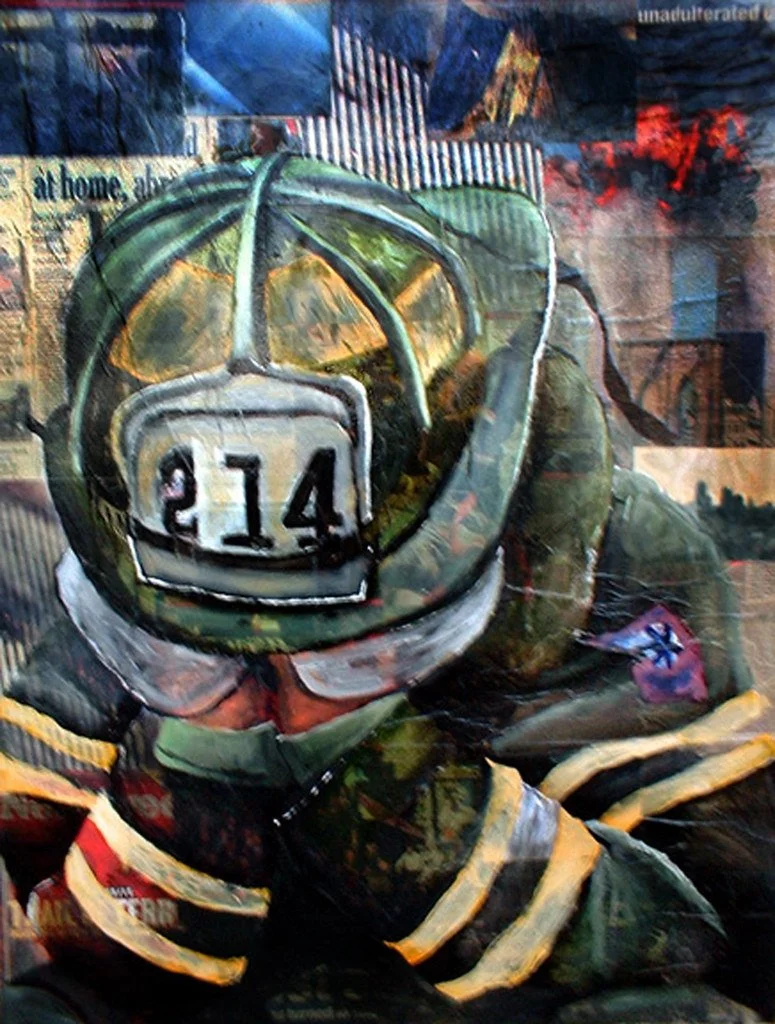
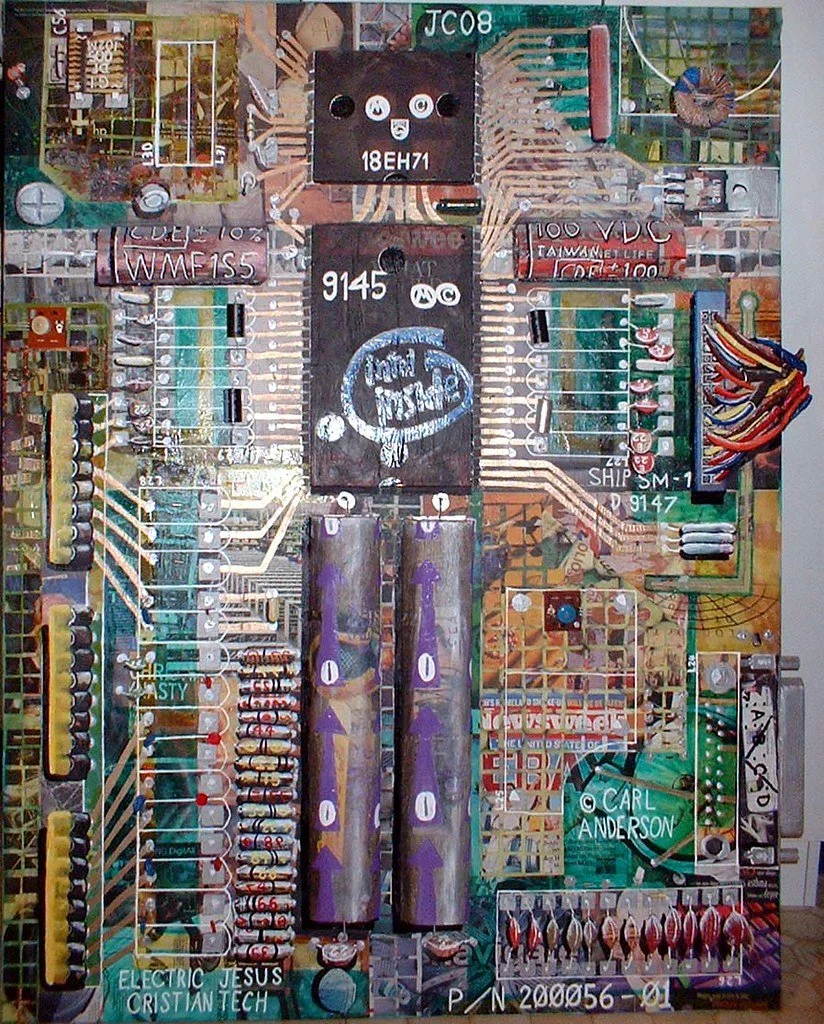
This technique worked, though my professor was thoroughly unimpressed by the situation that led to this hack. What I hadn’t expected was what this technique did for adding layered meaning to my work. So, I set out to produce more images comprised of found 2D materials. By the time I graduated I had developed my own signature style of image production where the scissors was arguably my primary instrument of image creation with the brush serving to embellish my work.
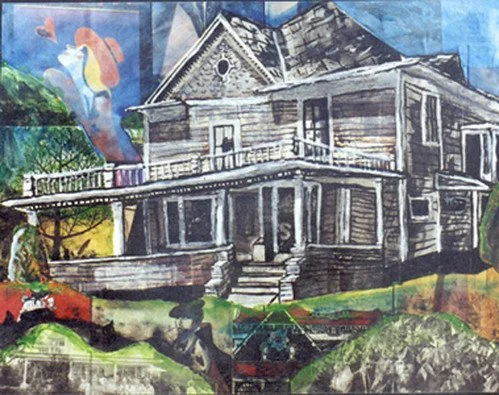
Like most artists I began collecting supplies. Every time I found an interesting image, magazine, or other two dimensional source I gathered it. While in college I worked summers for Qualex, an overnight photo lab owned by Kodak. It was the kind of place that processed your 35mm film when you brought it to Target or Walgreens for processing. My job was to cut the images that came off of a large roll of photo paper and match them to the negatives before pricing the package. This process produced a lot of duds which were normally gathered and thrown away. These duds were sometimes the result of ambient light hitting the paper when the rolls were loaded into the machine that developed the photos, others were created by photographers with their fingers over the lens or various other mistakes. I gathered these duds and kept them. The richness of color they showed was beyond what I could find with magazines or newspapers and were perfect for my work. The collage I did of Samantha was mostly made of duds I saved combined with photos I had of us.
I would later fall in love with Sharpie markers and whiteout as they were great compliments to this new collage medium I had developed. Nothing gave a brighter white than whiteout and whiteout pens made application and control of the medium easy. The richness and relative permanence of the Sharpie also made it an ideal medium for application to most 2d surfaces where paint was often unpredictable. This medium would later prove to be perfect for application of what I would come to understand as the Principles of Postmodern Art (Gude, 2004).
In college I was obsessed with two films: Basquiat (Scchnabel, 1996), which had been released my freshman year, and Superstar: The Life and Times of Andy Warhol (Workman, 1990). I would watch these two films over and over again as I worked. I also created an environment around me that emulated Warhol’s Factory, teaming with activity, music, guests, and often even celebrities. There would be chaos all around me but in the middle was always, like Warhol in the Factory, me working. I lost that aspect of my process when I got married and had children. But, it was something I regained thanks in large part to Samantha and our friends.